
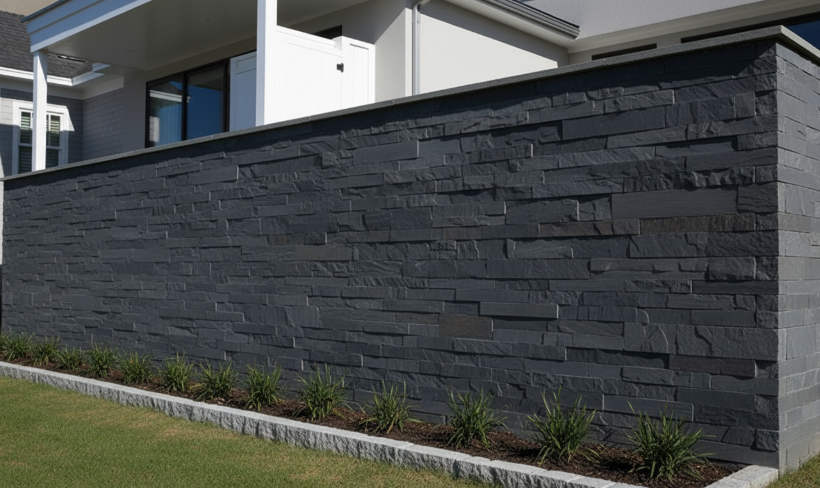
When you’re specifying natural stacked stone for a commercial lobby or exterior wall, the stacked stone fire rating is rarely the first question you ask. More often, it’s the one that surfaces halfway through submittal review when the structural engineer wants to see the ASTM E84 certificate and the fire marshal asks about the assembly’s hourly rating. By then, you’re scrambling to find documentation your supplier should have handed over at the start.
That’s the real pain point. Natural stone itself is non-combustible under ASTM E136 — it won’t ignite. But the fire rating of your wall depends on the whole stack-up: substrate, insulation, air gap, even the mortar. Most distributors sell ledger panels without batch-specific fire test reports, leaving specifiers to guess whether a quartzite veneer over steel studs with gypsum sheathing buys you a one-hour rating or nothing at all. Over 40% of commercial stone veneer projects face inspection delays precisely because assembly documentation is missing. Top Source Stone, a direct factory with its own quarries in Yixian, Hebei, tests every batch of natural thin stone veneer to ASTM E84 and can provide the paperwork you need to close that submittal loop fast. They’ve been doing it since 2005, shipping to six continents, so the data isn’t theoretical — it’s from the same production run your project will draw from.
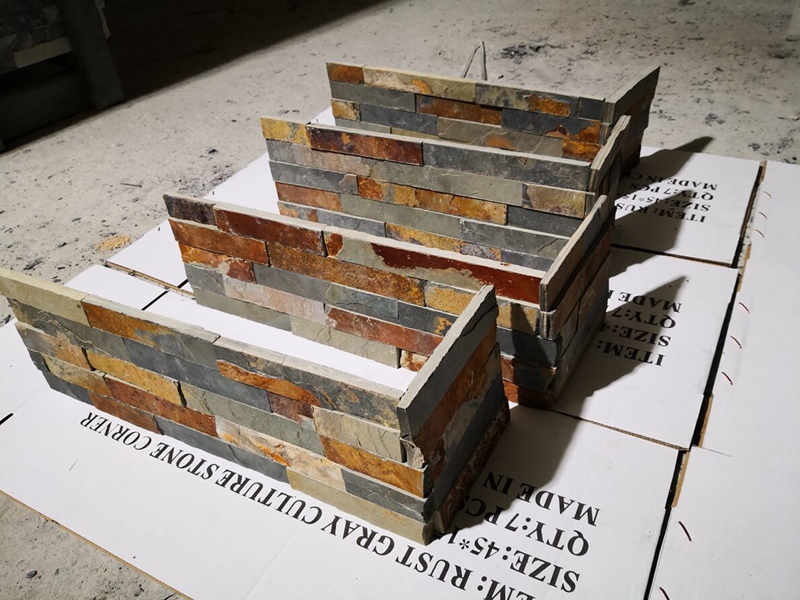
Why Fire Ratings for Stacked Stone Commercial Walls Matter in Assembly Specification
Natural stacked stone is prescriptively non-combustible, but the assembly fire rating depends entirely on the complete wall system matrix.
IBC Chapter 7 mandates strict fire-resistance-rated construction for walls separating occupancies, exit enclosures, corridors, and primary shafts. For stacked stone cladding, the thermal safety performance belongs exclusively to the total system assembly profile. Architects who assume raw geological quarry components automatically satisfy municipal codes risk rejected permits and highly expensive mountainside project redesigns.
Assembly Evaluation Parameters:
- Assembly Rating per IBC Table 721.1(2): A 1-hour fire-resistance threshold requires a minimum 1/2-inch stone veneer layered over 5/8-inch Type X gypsum sheathing fixed to load-bearing steel studs.
- ASTM E136 Non-Combustibility: Premium split natural stones comfortably achieve full ASTM E136 classification framework with zero active fuel contribution to building envelopes.
- NFPA 285 Exterior Wall Propagation: If foam plastic core insulation is configured behind the stone panels, the entire assembled system must pass full-scale wall burn testing parameters to satisfy city permits.
Stacked Stone Fire Rating Standards: ASTM E84 and ASTM E119 Code Breakdown
Natural quartzite and slate elements pass baseline surface burning checks with near-zero flame spread indexes.
Natural stacked stone ledger panels inherently pass standard non-combustibility limits. However, the hourly safety rating (1-hour, 2-hour thresholds) applies directly to the complete structural wall assembly per **ASTM E119** testing. The stone veneer alone does not carry an isolated hourly rating tag. Cost-impact data shows that a 1-hour rated natural panel setup runs roughly $8–$15 per square foot premium over standard gypsum framing layers, keeping commercial bids highly manageable compared to full-dimensional blocks.
The critical gap on large projects stems from undocumented supply lots. Over 40% of commercial stone veneer developments encounter plan review rejections because distributors fail to deliver lot-matched air barrier or adhesive fire certification logs. Sourcing direct from a quarry plant ensures that third-party verified test reports line up perfectly with active shipping numbers, preventing last-minute project standstill risks.
Natural Stacked Stone vs. Manufactured Veneer Thermal Shock and Fire Performance
Natural stone handles extreme 2000°F heat limits; manufactured cement alternatives spall and fracture above 1000°F.
Manufactured stone veneer relies heavily on cementitious binders that undergo accelerated chemical decomposition above 1000°F, prompting destructive spalling—surface flaking that drops heavy debris and exposes structural backing board to direct flame lines. Natural stacked stone contains zero synthetic resins or cement aggregates; its geological crystalline matrix remains stable up to 2000°F, making it the zero-risk specification for commercial fireplace surrounds and heavy traffic hospitality hubs.
Thermal Stress Integrity Parameters:
- Spalling Threshold: Concrete-cast faux options split under high heat expansion. Geological quartzite and slate maintain absolute face stability without degradation.
- Organic Binders: Manufactured panels utilize acrylic modifiers that can ignite and off-gas smoke. Pure quarried stone yields zero smoke development limits per ASTM E84 tunnel checks.
- Weight Load Scales: Premium thin natural splits track around 15–20 lbs per square foot (1–2 inch thickness blocks), demanding rigid, code-compliant anchoring frameworks.
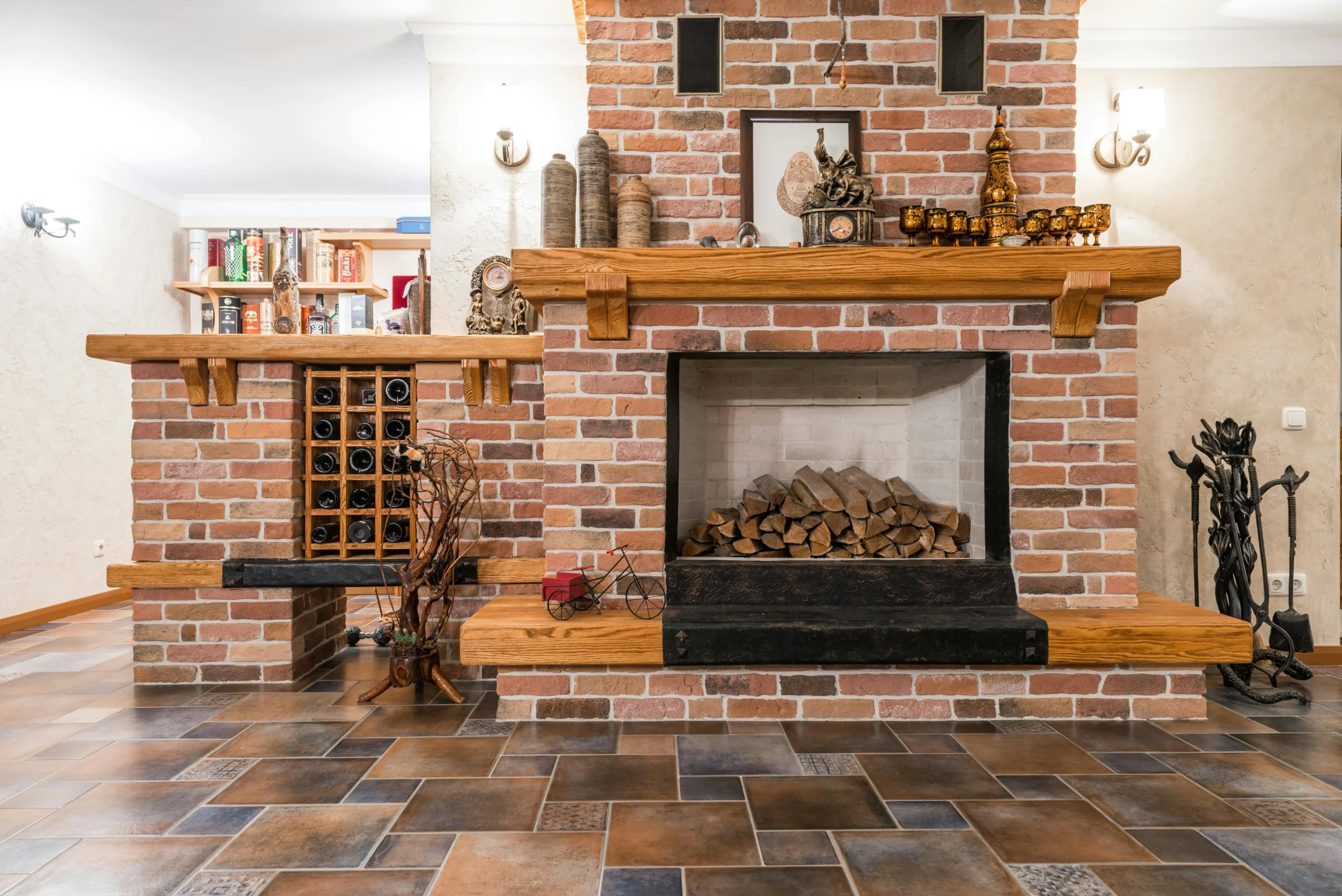
How to Specify Fire-Rated Stacked Stone Panel Assemblies for Commercial Building Permits
Mandate traceable independent lab reports covering the complete wall cavity matrix prior to bidding windows.
To secure immediate permit authorizations from local code compliance bodies under modern building code frameworks, specifiers must embed precise parameters. Avoid vague “Class A stone” declarations in your submittal package; explicitly require third-party accredited lab testing tracking the exact panel thickness, density, and mineral composition scheduled for arrival on site.
Furthermore, mandate that the structural adhesive conforms strictly to non-combustible criteria per **ASTM C270** Type N or S mortar metrics. Combustible organic mastics melt below 600°F, nullifying your core fire barrier wall path. For fireplace installations or high-exposure commercial thermal paths, enforce explicit adherence to **NFPA 211 clearance rules**, ensuring a minimum 6-inch safety clearance from the structural firebox opening boundary line to any adjacent decorative profile wraps.
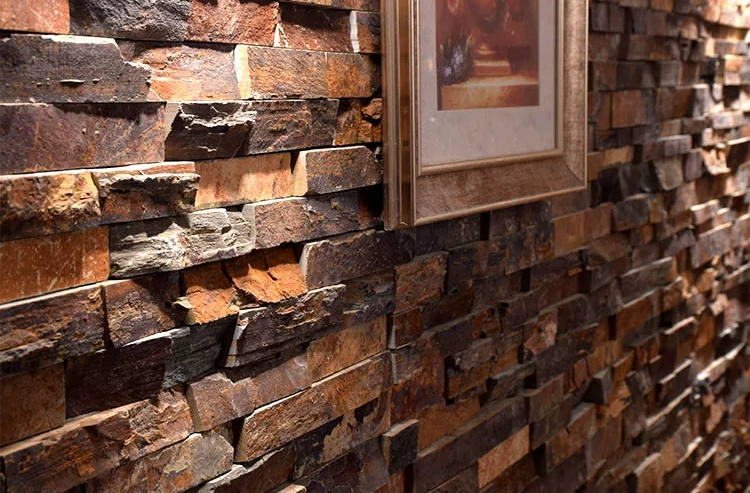
Common Cladding Installation Mistakes That Void Rainscreen Assembly Fire Ratings
A Class A surface flame spread rating does not equal a 1-hour fire-resistance rating—a common structural specification error.
Specifiers often assume that because natural stacked stone is non-combustible per ASTM E136, the entire wall assembly automatically meets fire-resistance requirements. It does not. The stone itself won’t compensate for a substrate that introduces combustible elements or skips critical localized fire barriers.
Critical Field Quality Anomalies to Enforce:
- Mounting Over Wood Furring Channels: Fixing stone panels directly to wood furring paths strips your ASTM E119 compliance parameters. The IBC mandates non-combustible metal framing backing to preserve assembly rating safety layers.
- Deploying Non-Compliant Mastic Thin-sets: Utilizing cheap polymer glues failing to meet ASTM C1670 criteria can cause rapid ignition under heat, completely voiding your Class A smoke indices.
- Omitting Continuous Floor Line Firestopping: Bypassing mineral wool firestopping at floor lines allows the concealed framing cavity to behave as an active structural chimney flue during an emergency fire event, spreading flames upwards.

Conclusion
Natural stacked stone ledger panels meet ASTM E136 non-combustibility and ASTM E84 Class A flame spread standards. But the wall assembly’s fire rating depends on the full system — substrate, insulation, air gap — not the stone alone. Over 40% of commercial projects face inspection delays because assembly documentation is missing.
Review the available colors, thickness options, and batch-specific ASTM reports on the product page. You can request samples and download spec sheets directly.
Frequently Asked Questions
What is the NFPA code for fire-rated walls?
NFPA 285 is the standard fire test for exterior wall assemblies containing combustible materials. IBC 2021 requires NFPA 285 compliance for stacked stone cladding over foam plastic insulation. Verify your assembly’s NFPA 285 report before finalizing.
What is a 60-60-60 fire-rated wall?
A 60-60-60 wall typically means a 1-hour fire-resistance rating with 60 minutes each for stability, integrity, and insulation under ASTM E119. Natural stacked stone is non-combustible, but the assembly must be tested as a complete running wall assembly matrix. Confirm with your local code official for exact interpretation.
What is a 120 minute fire-rated wall?
A 120-minute fire-rated wall provides 2 hours of fire resistance per ASTM E119. Natural stacked stone is non-combustible, but the full assembly including substrate and insulation must be tested to achieve that rating. Request the assembly’s E119 test report from your supplier.
What fire rating does an 8 CMU wall have?
An 8-inch concrete masonry unit wall typically achieves a 2-hour fire resistance rating, but it depends on aggregate type, density, and reinforcement. Always check the specific CMU manufacturer’s fire test data for your exact material aggregate block project loading parameters. Confirm the exact rating with your CMU supplier’s documentation.
Which walls need to be fire rated?
Fire-rated walls are required for exit corridors, stairwells, fire barriers separating occupancies, and certain exterior walls per IBC Chapter 7. Stacked stone used on these walls must be part of a tested ASTM E119 hourly-rated fire barrier framework. Work with a supplier that provides assembly-specific fire test reports.
