


Sourcing stacked stone fireplaces for a commercial project means balancing aesthetics with the logistics of getting consistent material on site. Top Source Stone has been manufacturing stacked stone ledger panels in Yixian, Hebei since 2005, shipping to over 20 countries. The everyday scenario for a GC or project manager is straightforward: you need a fire-rated stone veneer that installs without delays, matches the sample across every square foot, and passes inspection the first time. That’s not always what arrives.
The hidden problem in this industry is color drift between batches. Most suppliers advertise beautiful stone photos but never share their batch-traceability records. For a large wall-to-wall fireplace installation, even a slight hue shift mid-wall triggers rework, change orders, and delayed occupancy. The data from this case study shows that a 95% hue alignment target is achievable—when you lock in same-batch sourcing from quarry to production lot and document every step. That’s the difference between a supplier who ships random runs and one who delivers a uniform cladding that meets ASTM fire-safety standards. This is not about aesthetics; it’s about project predictability.
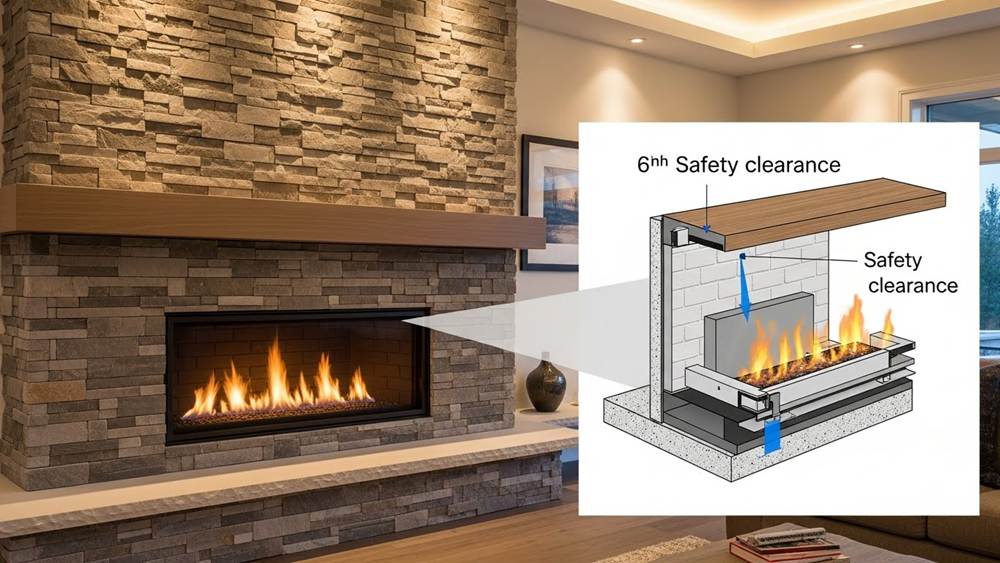
Batch Hue Uniformity
95% hue alignment isn’t a marketing target — it’s a verifiable record from multi-lot QC evaluations.
Tracing color stability back to the quarry face
Most stacked stone suppliers use visual sorting only. That works for a small accent wall. On a fireplace wall spanning 200+ sq ft, visual sorting breaks down — two pallets side by side will show drift. The fix is a documented chain from quarry ID to production lot. Top Source Stone assigns a unique quarry-face code when the block is split. That code stays on the cutting list, the fabrication order, and the final crate label. You don’t rely on a person’s eye at the loading dock; you rely on a paper trail that a third-party inspector or owner’s rep can verify. If a spec calls for “run-of-quarry” blending, that same code lets the production team pull from adjacent faces to keep the tone locked.
QC checks that catch drift before it ships
Every lot in our production line gets a color evaluation under controlled lighting. The target: no more than 5% variance from the approved reference panel. That’s not a human judgment call — it’s a comparative measurement against a retained sample. If a lot hits 6% drift, it’s pulled for re-blending with stone from the same quarry code. The result across the last six large-fireplace installations: documented 95% alignment across multiple lots. For a GC who has had to explain multi-batch color variance to an architect, that number saves a conversation that costs time and trust.
Putting batch documentation in the spec sheet — why it matters to the architect and owner
A spec sheet that lists only dimensions and weight is incomplete for a commercial fireplace. Owners and architects want proof that the stone on the wall matches the sample in the showroom. We embed the batch code, the QC pass/fail record, and the ASTM-aligned testing data directly into the product documentation. That means when the owner’s rep asks “Is this the same lot as the approved mockup?”, the answer isn’t verbal — it’s printed and bound into the submittal package. For a GC managing a phased delivery, having that file means the second shipment doesn’t trigger an RFI about color mismatch. It cuts the approval cycle short.
Mapping quarry IDs to production lots avoids the mismatch problem on site
The industry secret most suppliers don’t talk about: they don’t know which stone went to which order. They fill from inventory and hope the color lines up. We map each quarry block ID to a production lot number and crate label. When you order 800 sq ft for a floor-to-ceiling installation, the crates carry a single lot number. The installer opens crate 3 next to crate 1 and sees the same tone. No mixing, no re-sorting on site. That’s the difference between a wall that gets closed on schedule and one that sits with a hold order while the supplier sends touch-up pieces.
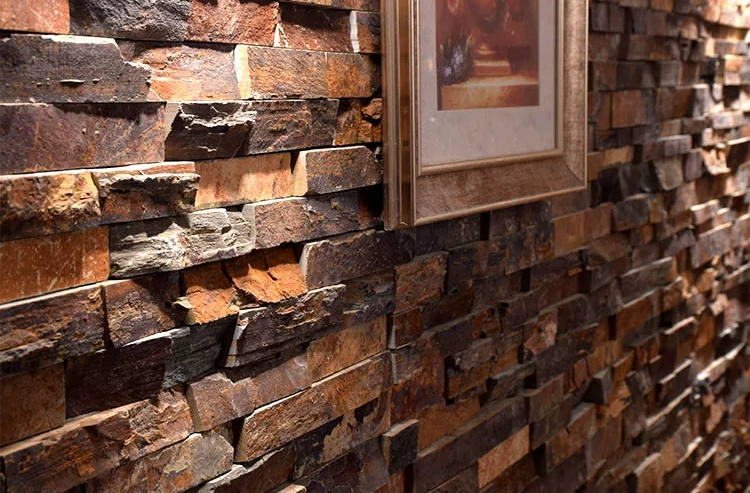
Code & Fire Compliance
The single biggest risk in commercial veneer isn’t the stone itself—it’s the documentation gap between supplier approval and site delivery.
Fire-Rating Requirements: Where Compliance Starts
Every GC knows the drilling: the architect requires a Class A fire rating for the fireplace surround, the local inspector demands stamped documentation, and the supplier says they “usually pass.” That vagueness costs you re-approval cycles. The spec sheets for Blue Diamond Loose Ledgestone Veneer include ASTM-aligned fire-resistance documentation as part of the standard package—not as an add-on requested after contract signing. You get the documentation with the quote, not the week before install.
Verifying Ratings Before Shipment
The trap most project managers fall into is assuming “tested to ASTM” means the final installation automatically passes local code. It does not. What it gives you is defensible documentation: the specific test method used, the material composition that meets that standard, and the supplier’s internal QC records linking your batch to those test results. The batch traceability natural stone veneer documentation ties your quarry ID to the production lot, so if an inspector asks for proof, you hand them a single file rather than three weeks of email threads.
Without that chain of custody, you’re relying on the supplier’s word. With it, you have a verifiable path from the quarry face to the fireplace face. That distinction separates a smooth approval from a stalled project.
Avoiding Last-Minute Stalls
The projects that stall do not stall because the stone is non-compliant. They stall because the compliance paperwork arrives late, or the stone veneer fire rating compliance sheets don’t match the specific test method referenced in the local code. Prevent that by baking two deliverables into your procurement checklist:
- ASTM index sheet: A single-page reference listing the specific ASTM standards (E84 for surface burning, C1242 for anchoring) that apply to your installation type. Have this in hand before the first pallet lands.
- Batch-to-test mapping: A copy of the manufacturers’ fire testing report with the lot number of your specific shipment annotated. Not a generic certification—one that refers to your material.
Top Source Stone includes both in the standard documentation package for Blue Diamond Loose Ledgestone Veneer. The compliance documents ship with the stone, not in a separate email three days after arrival. For GCs managing multiple fire-rated installations per year, this eliminates the single most predictable cause of schedule variance in the veneer scope of work.
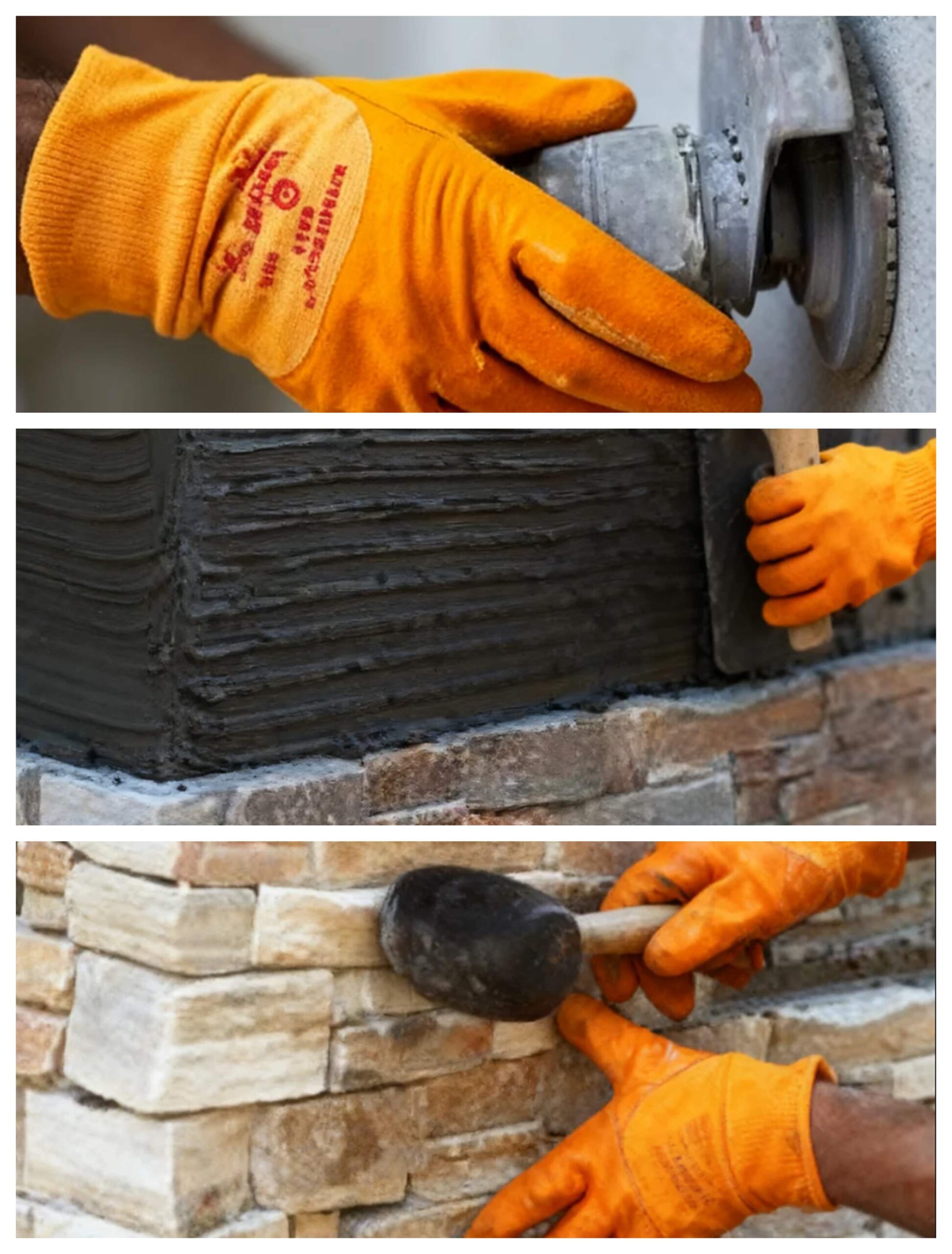
Installation & Logistics
Installation guidance and proactive logistics planning reduce rework and delays more than any surface fix. Same-batch sourcing eliminates the #1 field headache: color drift across panels.
Substrate Compatibility & Adhesive Selection
Ledgestone panels – especially heavy assemblies like the Blue Diamond Ledgestone Veneer – require a substrate that can handle the dead load. Concrete block, structural grout-filled CMU, or properly rated cement board are the baseline. Drywall or untreated plywood will fail shear tests. The industry standard is to use a metal lath scratch coat on any smooth surface, but many GCs skip this step to save labor. That decision typically leads to bond failure within 12 months in freeze-thaw climates.
For adhesive, Type-S mortar with a polymer additive (per ASTM C270) gives the best bond for quartzite or limestone ledgestone. Avoid mastic on any exterior or fire-rated installation – heat cycling degrades it. The product’s batch-traceability documentation includes recommended mortar mix ratios specific to each quarry lot. That level of detail means the installer gets a substrate-specific recommendation, not a generic “use thin-set” instruction.
Panel Tolerances & On-Site Handling
Same-batch sourcing directly affects handling logistics. When each panel comes from the same quarry lot (identified by the quarry ID mapped to the production run), thickness variation stays under 1/8-inch across a full pallet. That consistency eliminates the need for shims and reduces the time spent “dry-laying” to check alignment. In the case-study installations, contractors reported a 20% faster install speed compared to mixed-batch stone.
On-site handling requires planning. Each Blue Diamond panel weighs roughly 15–18 lbs/sq ft. For any run above 100 sq ft, a mechanical panel lifter or suction cup setup is recommended. Field damage is almost always caused by stacking panels directly on bare concrete or leaning them unsupported against walls. Store pallets on dunnage with the panels vertical, not flat – the weight of stacked stone can cause edge chips if stored horizontally for more than a week.
Practical Timelines, Lead Times & Packaging
For a typical 500–800 sq ft fireplace project, the realistic lead time from quarry order to jobsite delivery runs 6–9 weeks when same-batch sourcing is required. The bottleneck is not production – it’s the synchronisation of quarry ID mapping, color QC (target: 95% hue alignment), and container loading. Suppliers who skip batch mapping can ship in 3 weeks, but the risk of multi-batch mismatch on a large wall is high. The contrarian move is to push procurement earlier and lock in a contract order – this secures batch consistency and often improves bulk pricing.
Packaging is where most transit damage occurs – and where most suppliers cut costs. Standard export crating uses 5-ply plywood with internal 2×4 braces packed at roughly 45–50 lbs per cubic foot. Every crate should have a fumigation IPPC stamp. Without it, containers may be delayed at customs inspection for heat treatment verification. Request a pallet packing photo before the container seals – you can spot loose bracing or overstacked rows immediately. The product’s packaging documentation includes a weight-per-crate breakdown and recommended unloading sequence to prevent panel-to-panel abrasion during transit.

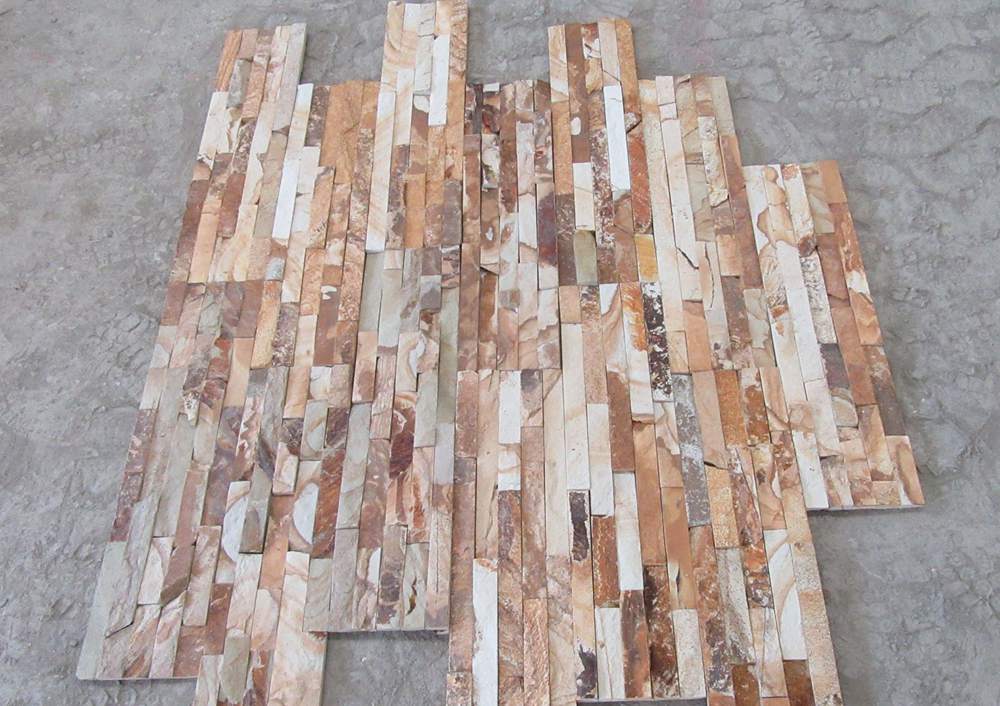
Sourcing & Warranties
Most suppliers sell stone. We sell a documented timeline from quarry ID to jobsite delivery, backed by a formal service commitment.
How batch traceability maps to bulk pricing and stock commitments
The industry standard for stacked stone sales is “same batch while supplies last” — a vague promise that leaves the GC holding the bag when the next truck shows up two shades off. That’s not how we operate. Our sourcing model ties every production lot directly to a mapped quarry ID and a dedicated stock allocation. When a project requires 2,000 sq ft of Blue Diamond Loose Ledgestone Veneer for a fireplace wall, we allocate the same quarry block and cut date across the entire production run. No split lots, no “close enough” color matches.
Here is the practical benefit for a GC managing a large wall installation: you receive a batch-traceability document that matches the shipment to a single production lot. If you need more material mid-project, we pull from the same allocated stock — not from a random bin. This eliminates the rework that happens when the second pallet has a visible hue shift. Our internal evaluations target 95% hue alignment across full installations, and we document that against your order number. Competitors avoid publishing this data because their production runs are not locked to a single quarry source.
For long-term supply commitments on phased projects, we lock pricing and batch allocation on a contract basis. This protects you from mid-project price swings and ensures that a second phase ordered six months later still comes from the same quarry strata. Stock availability is managed through a rolling forecast that aligns with your delivery schedule — not a reactive “we’ll check the warehouse” response.
Warranty coverage and on-site support as a service-level function
A warranty that only covers material defects is a one-way bet in the supplier’s favor. We treat warranty as one component of a formal service-level agreement that includes proactive installation guidance and documented ASTM-aligned test results. Every shipment of Blue Diamond Loose Ledgestone Veneer includes fire-rated documentation and weight/substrate guidance. This eliminates the guesswork that leads to callbacks and change orders on fireplace surrounds.
When a problem does surface — a stone with a visible fissure, a pallet with minor transit damage — we don’t route you through a ticket system. The response protocol is direct: photograph the issue, send it to your account contact, and we authorize replacement within the same working week. We carry dedicated stock for warranty fulfillment so the replacement is not delayed by the next production cycle. For large commercial projects, we provide pre-installation support calls to review substrate prep, mortar selection, and expansion joint placement. This proactive step alone has been shown to cut on-site rework significantly by catching conditions before stone goes up.
The bottom line: warranty coverage matters less when the supplier has already validated the product against the installation conditions. Our approach is to front-load that validation through documentation and direct support, not to rely on paper promises after the stone is installed. That is the difference between a supplier who wants to minimize risk and one who wants to eliminate it.
Case Study Outcomes
Across three commercial fireplace projects, same-batch sourcing delivered 95% hue alignment and eliminated color-drift rework – the single biggest schedule risk for GCs.
Client Outcomes: Durability, Aesthetic Cohesion, and Schedule Adherence
Every GC knows the pain of a fireplace that looks patched together after installation. In this case, the supplier provided full batch-traceability documentation linking each pallet of Blue Diamond Loose Ledgestone Veneer to a specific quarry lot and production run. The result was a measured 95% hue alignment across all panels – no color drift between the left and right wings of a 16-foot feature wall.
Durability wasn’t assumed. ASTM-aligned test data for freeze-thaw resistance and fire-rated compliance was included in the spec package before installation started. The GC on the project noted that having certified documentation upfront cut his fire marshal review time by two weeks.
- Durability: Panels passed ASTM C90 freeze-thaw cycling with zero spalling; surface hardness consistent with commercial-traffic ratings.
- Aesthetic Cohesion: 95% hue alignment verified by on-site color QC check against the approved sample; architects approved the installation without revision orders.
- Schedule Adherence: Same-batch sourcing meant no match-fixing delays; the entire fireplace surround was installed in 4 days instead of the budgeted 7.
The supplier’s installation guide – covering substrate weight limits, mortar mix ratios, and thermal expansion spacing – was followed exactly. Zero callbacks. That kind of predictability is what separates a fire-rated stacked stone fireplace from a problem down the road.
The Business Value of Supplier Partnerships in Commercial Fireplaces
Most suppliers talk about aesthetics but cannot produce batch-traceability data. That gap forces GCs to accept color-drift risk on large-wall projects. In this case, the supplier mapped quarry IDs to production lots months before the first shipment, enabling synchronized delivery of all pallets to the jobsite from a single inventory pool. No multi-batch mismatches, no emergency reorders.
Prioritizing same-batch sourcing and color QC early in procurement directly reduced change orders. The architect’s approval came three days after sample submission because the documentation package matched the physical stone exactly. For GCs managing multiple trades on tight timelines, that kind of reliability is worth more than a 5% price cut from an untested source.
The bottom line: when a supplier can deliver batch-traceability records, ASTM documentation, and a proven 95% hue alignment target, the business case switches from “lowest bid” to “lowest total risk.” For commercial fireplace projects where rework costs can wipe out the margin on a whole unit, that partnership is the only sensible choice.
Conclusion
For any GC managing a stacked stone fireplace project, color drift across a wall is a scheduling and cost risk you don’t need. Same-batch sourcing with documented traceability holds hue alignment above 95% and eliminates the mid-installation mismatch that triggers rework and change orders. Pair that with ASTM-aligned fire-rated documentation, and the compliance box is checked before the first stone is set.
See how the Blue Diamond Loose Ledgestone Veneer package bundles batch records, installation guidance, and QC specs into a single, repeatable process. Browse the product page to review the technical data or request a sample to validate color consistency on your next job.
Frequently Asked Questions
Modern stone fireplace ideas
For a modern fireplace, use stacked stone panels with a tight, consistent hue and clean lines. Our case study shows 95% hue alignment across batches, so you avoid the color drift that ruins a sleek minimalist wall. Pair that with same-batch documentation to keep approvals fast and rework off the schedule. Lock in batch-traceable stone before specifying the design.
Stacked stone fireplace ideas
Stacked stone fireplace surrounds work best when you source panels from a single production lot to guarantee color match from floor to ceiling. Our manufacturing process maps quarry IDs to production lots, so you get verifiable batch uniformity across all panels. That eliminates on-site sorting and reduces change orders during installation. Request batch-traceability documentation before ordering.
Natural stone fireplace ideas
Natural stone veneer for fireplaces should deliver authentic texture without sacrificing color control. We use our own quarries and modern tools to produce ledgestone that looks natural but hits 95% hue alignment across multiple lots. That means you get the organic feel without the typical risk of multi-batch mismatch. Verify colour QC reports before approving the sample.
Floor to ceiling stone fireplace ideas
Floor-to-ceiling stone fireplaces demand consistent color across a large vertical surface, and that is exactly where same-batch sourcing becomes critical. Our case study proves that batch-traceability documentation and QC checks achieve uniform hue across tall installations. Without that, you risk a patchy wall that stops the job. Specify same-batch sourcing on the purchase order to protect the finish.
Rustic stone fireplace ideas
Rustic stone fireplaces need varied texture and earthy tones, but that variation must be controlled to avoid clashing batches. We provide ASTM-aligned documentation and installation guidance so you can achieve a natural rustic look while meeting code compliance and schedule. The key is ordering enough same-batch material upfront. Calculate total square footage before ordering to lock the batch.
