

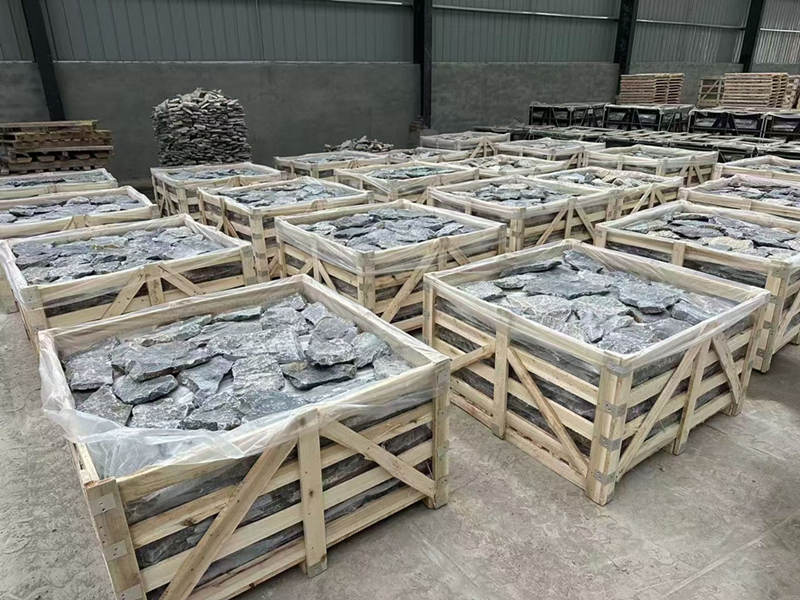
The question every GC should ask before specifying loose ledgestone veneer: ‘Will the batch color match the sample across all 5,000 square feet?’ The standard answer is yes. The real answer is it depends on three numbers you probably didn’t put in your submittal. A $50K order can go sideways fast when the pre-production sample approval doesn’t reflect what lands on the dock.
Most supplier spec sheets show one polished board and skip the data that actually protects your schedule. Thickness tolerance is the first gap—demand ±2 mm or your masons spend days shimming. Batch color uniformity is the second: a CIE Lab ΔE below 3 keeps the facade from turning into a patchwork of mismatched pallets. Then there’s landed cost—FOB pricing at $2.65/sqft might look good, but add 8.5% duty under HTS 6802.23.00 and $5,000 freight, and you’re at $3.75–$4.10/sqft. Without these three specs locked in your submittal, you own the strip-out risk.

Why Most Loose Ledgestone Submittal Specs Fail Architectural Facade Reviews
Three hidden specs cause 90% of structural masonry strip-out claims.
The typical supplier submittal shows a polished sample board but omits the dimensional variance across a full order. A 3 mm thickness swing forces masons to shim or grind each piece — that adds two to three field days per thousand square feet. Worse, when pallets lack batch color IDs, stones from different quarry veins land on the same wall. The result is a patchwork facade visible from fifty feet. The GC owns the cost: strip out, replace, and lost schedule. Industry estimates peg 60% of re-install claims to exactly this batch-color mismatch.
Submittal Deviation Risk Indicators:
- Dimensional Variance Boundaries: Expect a ±3 mm range across a full loose ledgestone order unless you spec a tighter tolerance. That variance triggers shimming, grinding, and re-cutting — labor the mason didn’t bid for. A ±2 mm tolerance is the industry benchmark and should be written into the submittal.
- Thickness Swing Constraints: A 3 mm swing on a 25 mm nominal stone is common from suppliers who sort by eye. Every stone outside tolerance forces the installer to manually adjust, eating into the labor allowance. Demand a pre-shipment QA video where 20 random stones per 1,000 sqft are measured with a digital caliper.
- Missing Batch Color ID Manifests: When pallets carry no batch identifier, stones from different quarry runs get mixed on the wall. The CIE Lab ΔE between batches can exceed 5 — a visible mismatch under overcast light. Require a same-batch sourcing certificate and a ΔE < 3 report.
Landed Sourcing Costs Breakdown: HTS 6802.23.00 Tariffs and Intermodal Ocean Freight Rates
Budget $3.75–$4.10/sqft landed for a 28-ton container — don’t forget the 8.5% duty.
The FOB price from Chinese quarries for loose quartzite or slate ledgestone runs about $2.65 per square foot for a 28-ton container holding roughly 5,000 sqft. That’s the ex-factory price loaded onto the vessel, but it’s only half the story. Once you add the HTS 6802.23.00 duty of 8.5% — which applies because the stone is sawn flat on one side for thinset application — plus ocean freight and drayage, the real number climbs fast.
Landed Supply Chain Line Items:
- FOB China Baseline: $2.65/sqft for quartzite/slate loose ledgestone — assumes 28-ton container (5,000 sqft) loading footprints.
- HTS Tariff Duty (6802.23.00): 8.5% ad valorem for sawn veneer. Unsawn split stone qualifies for 3.7%, but most commercial specs require a sawn back for consistent bonding.
- Ocean Freight Pricing: $4,500–$6,000 per 40ft HC container to US West Coast ports. East Coast destinations map an added $1,500–$2,500 premium.
- Drayage & Customs Brokerage: Expect $800–$1,200 from terminal port to jobsite locations within 50 miles, plus fixed broker clear fees (~$200).
Add it up: $13,250 FOB + $1,126 duty + $5,000 freight + $1,000 drayage = $20,376 total, or $4.07/sqft. The range lands at $3.75–$4.10/sqft depending on exact freight and distance. Many GCs only budget FOB and get blindsided by the duty line — include it in your submittal cost breakdown upfront to avoid a change order.
| Cost Component | Rate / Amount | Notes |
|---|---|---|
| FOB Price (Factory Gate) | $2.65 per sqft | For quartzite/slate loose ledgestone; 28-ton container = ~5,000 sqft |
| HTS Duty (6802.23.00) | 8.5% ad valorem ($0.225/sqft) | Applies if stone is sawn on one side; unsawn split stone qualifies for 3.7% |
| Ocean Freight (China → US West Coast) | $4,500 – $6,000 per 40ft HC container | Approx. $0.90–$1.20/sqft; live container market rates |
| Drayage & Customs Clearance | $0.10–$0.15/sqft (estimated) | Port handling, customs broker, inland trucking to jobsite |
| Total Landed Cost per sqft | $3.75 – $4.10 | Excludes packaging & mason labor; add $1.50–$2.50/sqft for installation |
Loose Hand-Stacked Ledgestone vs Pre-Assembled Mesh Panels: Scheduling Optimization Profiles
Pre-assembled panel grids compress site scaffold time 40% but impose repeating horizontal seam breaks every 8–12 inches.
If your spec says ‘loose ledgestone’ but the subcontractor prices a panel system, you’re looking at a change order the minute the drawings hit the field. The installation method directly controls the schedule and the final appearance — and the two formats are not interchangeable without re-bidding the labor.
Material Format Productivity Differences:
- Pre-Assembled Ledger Panels: Reduces site staging by roughly 40% due to modular pre-ganged backings. However, it imposes linear joint bounds every 8-12 vertical inches across rows.
- Loose Hand-Stacked Veneer: Eradicates repeating panel lines completely to deliver an authentic organic look. Requires an added $1.50–$2.50 per square foot field masonry installation margin.
The spec must state the format explicitly. If the architect’s elevation shows random-length staggered joints (which is impossible with 8-inch panel grids), the GC must flag it during submittal review. A mismatch between the drawing intent and the bid assumption is the single fastest way to blow the schedule and the budget on a stone veneer package.
Verifying Color Uniformity Certificates and CIE Delta E Tolerance Standards Pre-Shipment
Without an explicit CIE Lab ΔE < 3 threshold constraint, you carry total replacement liability on hue drift.
The top cause of stone re-install claims on commercial facades — roughly 60% by industry estimate — is batch color mismatch. That polished sample board in the submittal package tells you nothing about the hue shift between pallets in a 28-ton container. You need an objective metric, not a photo.
Aesthetic Verification Checkpoints:
- Spectrophotometer Criteria: Enforce CIE Lab ΔE < 3 across the full shipment volume. This locks an identical 95% hue uniformity threshold, blocking detectable side-lighting color breaks.
- Single-Vein Quarry Sourcing: Sourcing from secondary consolidated open blocks causes rapid variegation. Mandating trace mining block licenses fully eliminates lot matching anomalies.
Before the container leaves the yard, perform a sample-to-bulk match. Have the supplier line out pieces from each pallet next to the approved sample and send a pre-shipment QA video. Top Source Stone does this as a standard step — a single video that can prevent a $15,000 strip-out claim. If your supplier hesitates, you are the one holding the risk.
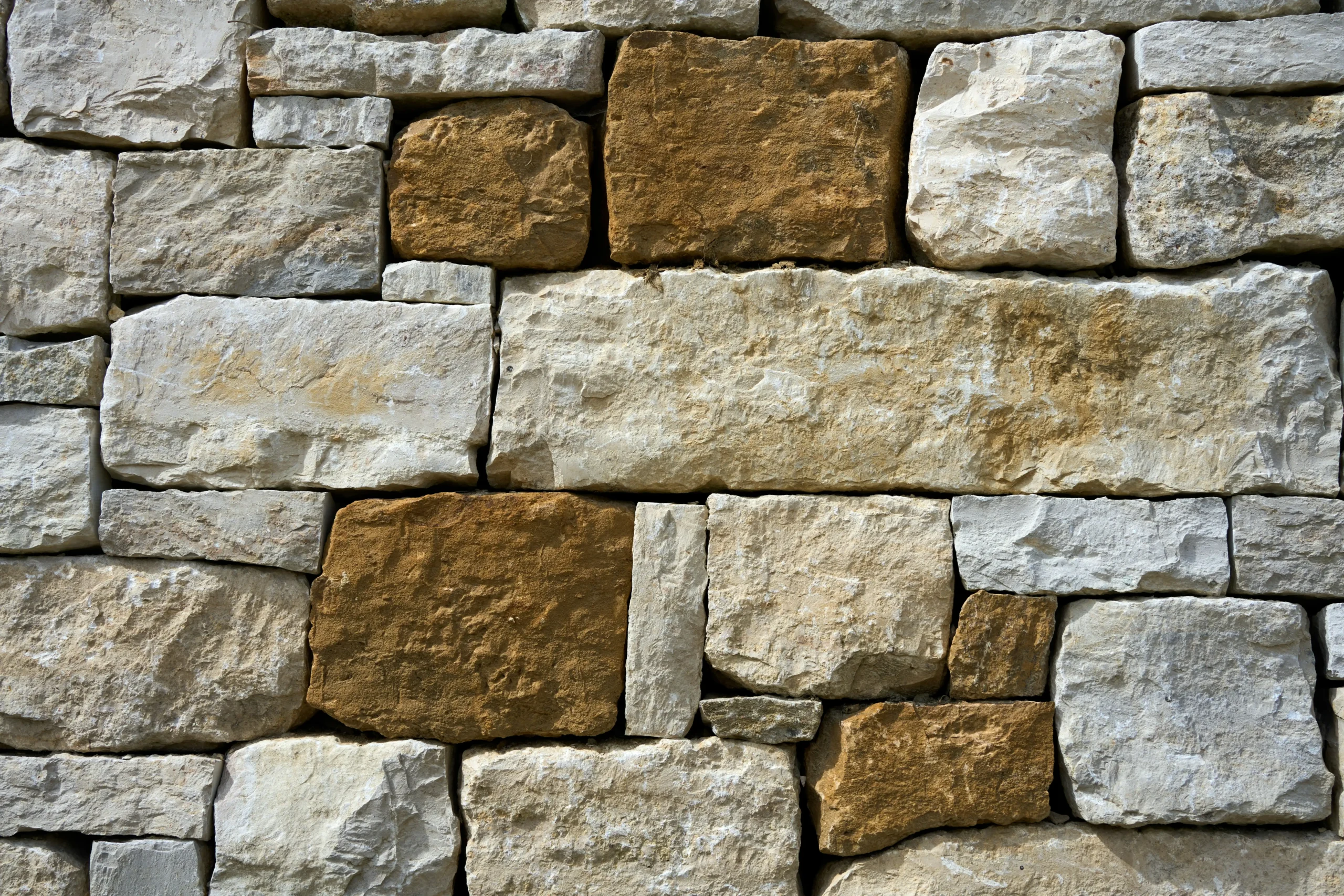
How to Write an Ironclad ASTM C1670 Loose Ledgestone Submittal Specification Checklist
Lock these five submittal spec parameters to completely eliminate $15k project field rework risks.
Standard submittals from suppliers show a polished sample board but omit the data that protects you from a $15,000 re-install. Write these five requirements into your spec or RFQ. They are the difference between a job that stays on schedule and a change order that eats your margin.
Architectural Engineering Checklist:
- Same Quarry Vein Mandate: Demand that all stones come from a single vein within the same quarry to prevent 20% hue shifts across bulk container lots.
- Thickness Tolerance ±2 mm: Enforce strict mechanical calibration. Wider variance drives intensive on-site grinding, blowing general condition labor hours.
- Structural Weight Restrictions (≤15 psf): Limit raw modular units to 15 lbs per square foot to safeguard thinset bond flexibility and satisfy framing dead load targets.
- Freeze-Thaw Testing (ASTM C1670): Enforce explicit compliance with ASTM C1670 standards, supported by recent lot-linked cyclic freezing testing pass data.
- ASTM E84 Class A Fire Rating: Mandate third-party authenticated surface burning data (flame spread 0–25) to clear public facility permit hurdles smoothly.
The submittal package must include both the mine source report and the CIE ΔE report. The mine source report proves the single-vein origin. The CIE Lab ΔE report must show ΔE < 3 across the batch — this is 95% hue uniformity. Also require a pre-shipment QA video of the entire order (Top Source Stone provides this; most competitors do not).
Conclusion
The difference between a spec that protects your budget and one that leaves you exposed comes down to a single step after sample approval. You can lock thickness tolerance and quality tolerance into your submittal package, but if the production batch drifts from the approved master, none of that contract language prevents a strip-out.
Insist on a pre-shipment QA video of the entire batch before it leaves the factory floor. One visual confirmation cuts the risk of a $15,000 re-install claim — and that’s the final 10% most buyers overlook.
Frequently Asked Questions
What is the minimum order quantity for loose ledgestone from China?
Minimum order for factory-direct pricing is typically a full 28-ton container, roughly 5,000 sqft. Smaller trial orders may be possible through stock programs, but expect a higher per-unit cost. Confirm MOQ with your supplier based on stock vs. custom production.
How do I verify thickness tolerance on site?
Measure random pieces from multiple pallets using a caliper; the spec should demand ±2 mm thickness tolerance. Reject any pallet where more than 10% of pieces fall outside that range. Include this verification step in your incoming inspection checklist.
Can I avoid the 8.5% HTS duty on sawn stone veneer?
No, if the stone is sawn on one side it falls under HTS 6802.23.00 at 8.5%. Only completely natural split-face pieces without any saw cut might qualify for a different classification rate under customs broker codes. Factor the 8.5% duty into your landed cost budget from the start.
What freeze-thaw test standard should my spec reference?
Reference ASTM C666 (Standard Test Method for Resistance of Concrete to Rapid Freezing and Thawing) for natural stone veneer. The standard covers freeze-thaw durability for exterior cladding applications. Request freeze-thaw test reports from your supplier before finalizing the spec.
How far in advance should I place a factory-direct order?
Place your factory-direct order at least 8–10 weeks before the installation start date. This allows for production, ocean freight, and customs clearance, plus a 2-week buffer for common delays. Work backward from your job site critical path milestones to lock the container release code.
