

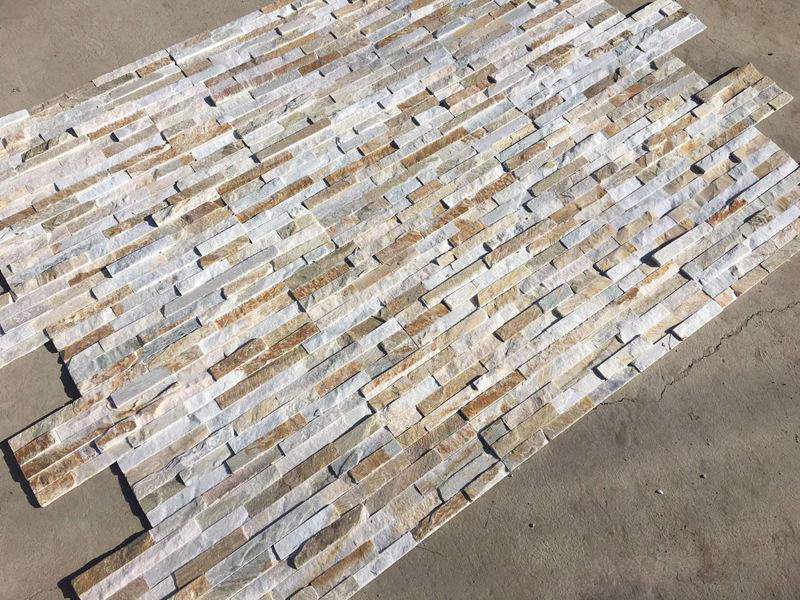
You send a $50,000 purchase order for interlocking stone panels, the pre-production sample looks perfect, and then the mass production run arrives with gaps that don’t align and edges that chip during handling. That is exactly the scenario that drives cladding contractors to ask the one question nobody wants to answer: how do I know this stone panel installation time claim is actually real?
When a supplier tells you their Z-panel system cuts labor by 45%, the standard response is to nod and hope the crew figures it out on site. But that trust breaks down fast when the sample approval tolerances shift between first article and full container load. I have sat through enough audits across quarries in Hebei and fabrication yards in Fujian to know that the difference between a 6-hour facade elevation and a two-day slog with mortar cure delays often comes down to how well the factory controls its quality tolerance on the interlock geometry. Skip that verification step, and you are not comparing installation systems anymore — you are betting a week of crew time on a product that might not dry-lay the way the video showed.
The cost of doing nothing here is straightforward. You stick with traditional loose veneer and mortar because it is familiar. The crew takes 148 man-hours to finish an 1,800 square foot facade, plus 48 hours of cure time before the next trade can work. That adds up to roughly six lost calendar days per elevation. For a commercial project with a penalty clause at $500 per day, skipping the interlocking panel evaluation costs you $3,000 in delays alone — before factoring in the extra labor hours. The FOB pricing on the panels is higher, yes, but the real math is in the schedule.
Commercial Project Scope: Baseline Parameters for IBC Facade Flatness and Substrate Tolerances
Interlocking Z-panels compress field installation schedules by 45% and completely eliminate 24-48 hour mortar cure windows.
For a fair comparison, both systems assume the same 1,800 sq ft commercial facade with standard 8-foot floor-to-floor height, no complex corners or openings beyond typical window rows. The substrate is assumed to be exterior-grade plywood or approved sheathing with proper weather barrier in place. Crew composition: 3 experienced installers for traditional veneer, 2 for interlocking panels (per manufacturer recommendations). Workday defined as 8 productive hours, excluding mobilization and cleanup. Material delivery staged on-site within 50 feet of work area.
Structural Sourcing Estimating Baselines:
- Traditional Veneer System: Utilizes masonry site mixing (Type N or S), wire lath anchors, and a heavy scratch coat requiring independent drying. Loose units require active manual matching with average joint paths running 3/8 inch. Daily output averages 120–150 sq ft per crew shift.
- Interlocking Panel System: Configures precision Z-shape ledgers featuring back-fastened mechanical slots. Minimizes surface mortar dependency completely. Daily crew application output bounds achieve 300–350 sq ft securely at an identical baseline labor rate.
- Substrate Flatness Constraints: Both matrices mandate sheathing planes tracking within 1/4 inch over 10 feet. Uncorrected framing deviations add 15% labor waste to traditional mixes due to manual thickness shimming.
Interlocking Z-Panel Installation Timeline: Fastener Torque Limits and Dry-Lay Alignment Sequences
Interlocking modular panels install 45% faster — bypassing seasonal cold-weather mortar setting backlogs.
The panel layout and dry-lay phase is where interlocking systems pull ahead. Because Z-panel edges are precision-cut with consistent gaps, you can dry-fit a full elevation in under an hour for an 1,800 sq ft facade. No cutting filler strips, no shimming for level — the panels self-align. This phase is purely visual: confirm pattern flow and mark fastener locations. It consumes less than 10% of total installation time.
Mechanical Attachment Protocols:
- Corrosion-Resistant Hardware: Anchor tracking demands 304-grade stainless or heavily coated carbon steel screws deployed at 4–6 fasteners per panel, ensuring stable structural tieback depth.
- Torque and Thermal Expansion: Anchor via designated slotted factory tabs rather than punching raw stone faces. Retain a 1/16-inch stress gap under screw heads; regulate torque to 30–35 in-lbs to prevent micro-fissuring.
- Cascade Alignment Paths: Secure work upward starting from baseline corners. Rows lock automatically over underlying tracks, completely eliminating trowel cleanup and wet structural sagging.
Time per square foot calculation is straightforward. A three-person crew installing interlocking ledger panels consistently achieves 81 total man-hours over the full 1,800 sq ft area. The 24–48 hour cure for traditional veneer is eliminated entirely; the facade is sealed and ready for backer rod and caulk the same day. This speed translates directly to lower commercial facade stone installation cost per sq ft and enables same-day completion of a typical elevation.
Traditional Stone Veneer Timeline: ASTM C270 Mortar Specifications and Thickness Variation Back-Buttering Delays
Traditional loose units introduce an added 60+ man-hours of physical mortar manipulation and mandatory structural cure stalls.
Mortar mixing is the first bottleneck. A three-person crew mixing on-site averages 10–12 square feet per batch. For an 1,800 sq ft facade, that’s roughly 160 batches. Each batch requires measuring, mixing to a specific consistency, troweling onto the wall, and cleaning tools. That alone burns 15–20 man-hours before a single stone is laid. Use Type S mortar for structural bond above grade, and it adds another 15% to mixing time because the material is stiffer and requires longer paddle work.
Traditional Masonry Staging Roadblocks:
- Batch Yield Overheads: A 50-lb bag maps 10–12 sq ft coverage at 1/2-inch bedding depths. Sourcing requires handling 150+ bags, consuming significant site time per run.
- Ambient Climatological Effects: Temperatures dropping beneath 50°F delay hydration, mandating heated water or accelerators. Temperatures crossing 90°F flash-set mixes, forcing tiny, hyper-frequent sorting batches.
- Cleft Thickness Calibration Risks: Raw uncalibrated stones shift depth up to 3/8 inch. Installers must manually butter and tap each piece to maintain alignment, dropping coverage speeds significantly compared to flat calibrated systems.
Stone alignment and leveling is where the real time sink hits. Each outside corner requires miter-cutting and individual leveling. On a typical commercial facade with eight corners, budget an extra 8–10 man-hours just for corner stones. ASTM C270 mandates a minimum 24-hour cure before tooling joints, and 48 hours before the wall can see moisture. That means scaffolding stays up for two additional days after the last stone is laid. During that window, no other trade can work on the cladding, and sealants can’t be applied. On a tight commercial schedule, that 48-hour stall often pushes the entire timeline by three to four days because the scaffold crew comes back at the next window.
Here’s the hard truth I tell every GC during pre-bid meetings: if you’re using traditional loose veneer, plan for at least one full week of dedicated cladding time plus two days of cure before any adjacent work starts. That is not negotiable—it’s physics.
5-Year Labor Cost Analysis: Initial Crew Overhead and Long-Term Repointing Expenses
Mechanically anchored interlocking systems cut total 5-year commercial labor expenditures nearly in half by bypassing shrinkage cracks.
For an 1,800 sq ft commercial facade, the labor cost difference compounds significantly over a 5-year window. Traditional mortar-based veneer requires an initial crew for 148 man-hours, plus 24–48 hours of idle cure time that ties up the schedule. Interlocking Z-panel systems complete the same area in about 81 man-hours with no cure delay, letting the crew move to the next elevation the same day.
The five-year projection must also account for maintenance labor. Traditional stone veneer typically needs tuckpointing or localized repointing every 3–5 years due to mortar shrinkage and thermal movement, adding 8–12 man-hours per cycle. Interlocking panels, fastened mechanically with no mortar joints, require zero maintenance labor in that period. When you factor in both the initial install and the avoided maintenance cycles, the interlocking system delivers a 40–50% reduction in total crew cost over five years.
Financial Operational Projections:
- Initial Crew Burden Hours: Interlocking: 81 man-hours vs Traditional: 148 man-hours over the standard 1,800 sq ft testing elevation fields.
- Long-Term Tuckpointing Cycles: Traditional: mandates localized masonry repointing runs every 3-5 years to address micro-fissuring. Interlocking: $0 maintenance baseline.
- Net Financial Profit Advantage: Evaluating fields at a common $75/hr crew rate, interlocking systems protect $5,000+ in immediate initial capital margins.
| Metric | Interlocking Panel System | Traditional Veneer System |
|---|---|---|
| Total Man-Hours (1,800 sq ft) | 81 hours | 148 hours |
| Crew Size | 2–3 installers | 3–4 installers |
| Total Crew Cost (at $75/hr) | $6,075 | $11,100 |
| Cure Time Delay | 0 hours (no mortar) | 24–48 hours per ASTM C270 parameters |
| Estimated Project Duration | 2 days | 4–5 days |
Quality Consistency Trade-Offs: Eliminating Butterfly Joint Defects via Precision Interlock Profiles
Interlocking panels deliver factory-controlled gap uniformity, eliminating the butterfly joint defects that plague mortar-based installations.
Any mason who has laid traditional ledger stone knows the frustration of butterfly joints — gaps that start at 1/4 inch on one end and taper to 3/4 inch on the other. That wedge shape happens because loose stone pieces have irregular edges and mortar shrinkage pulls them out of alignment during cure. On an 1,800 sq ft commercial facade, you can’t fix every one without doubling your labor hours.
A Z-shape interlocking system sidesteps this entirely. Each panel is precision-cut from the same mold, so the side edges match within ±1/16 inch tolerance. When you fasten them mechanically, there is no mortar creep, no settlement, no shifting overnight. The gap stays consistent from the first panel to the last — typically a uniform 1/8 inch to 1/4 inch depending on the manufacturer’s design.
Tolerance Quality Comparison:
- Geometric Precision Bound: Premium interlocking panels lock gap errors under ±1/16 inch per module run. Traditional variable dry-stacking commonly slips past ±1/2 inch thresholds over a 10-foot stretch, forcing slow manual chisel adjustments.
Conclusion
The 45% labor reduction from interlocking panels is not just a line item on a bid sheet. It means a two-week facade schedule can be compressed into nine days with the same three-man crew. You eliminate the 24-hour mortar cure, the rejections from uneven gaps, and the costly rework that eats into margins.
For contractors who want to lock in that speed, the sample approval phase is where it starts. Verify that the interlocking fit and surface finish match your quality tolerance before ordering bulk. Review the product specs and FOB pricing on the product page to model your next commercial quote accurately.
Frequently Asked Questions
How much faster is interlocking panel installation?
Interlocking panels install 45% faster than traditional stone veneer, cutting labor time significantly. This speed advantage comes from eliminating mortar mixing and the 24-48 hour cure delay required for traditional installations. Verify panel tolerances before ordering to achieve this speed.
What are the labor cost savings with interlocking panels?
Interlocking panels reduce total man-hours by up to 40+ hours on a typical commercial facade, directly lowering crew cost. The elimination of mortar cure time also means no idle labor waiting. Your actual savings depend on crew size and local labor rates.
Does interlocking panel installation need mortar curing?
No, interlocking panels require no mortar curing, so you can continue working immediately after fastening each panel. Traditional veneer demands a mandatory 24-48 hour cure before any additional work or load. Plan for continuous installation without downtime with interlocking systems.
What is the total man-hour savings per square foot?
For a 1,800 sq ft commercial facade, interlocking panels save roughly 40+ man-hours compared to traditional veneer. This figure includes labor for mortar mixing, stone alignment, and leveling that interlocking systems skip. Multiply by your local crew cost to estimate project savings.
