
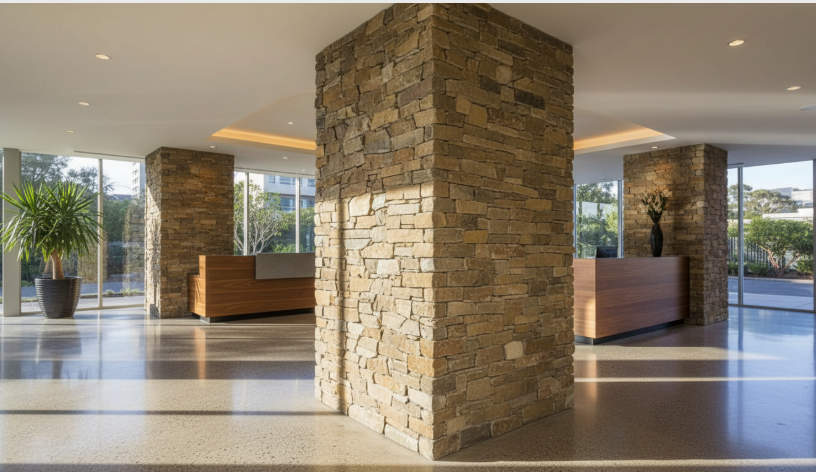
Choosing the right ledgestone veneer determines whether a commercial facade maintains its structural integrity or succumbs to the delamination risks common in cheap, pre-glued panels. Architects and developers face significant financial liability when moisture traps or adhesive failures lead to stone detachment, often forcing expensive repairs and damaging firm reputations. Using loose, individual strips instead of mass-produced panels mitigates these risks by ensuring a mechanical bond that survives temperature fluctuations and environmental stress.
This technical overview details the specifications required for high-end masonry, from managing depth variations between 0.5 and 1.5 inches to selecting between slate, quartzite, and granite. We examine how sawn-edge technology allows for tighter joints and faster installation, providing a clear standard operating procedure for interior feature walls and exterior cladding. By focusing on these material properties, project managers can ensure long-term durability while meeting modern aesthetic demands.
Why Ledgestone is Replacing Traditional Brick in Modern Architecture
Thin stone veneer is displacing traditional brick in modern specifications by providing a high-density, 100% natural alternative that reduces structural weight by up to 70% while offering a bespoke random-lay aesthetic impossible to achieve with repetitive masonry units.
Architects in 2026 favor ledgestone for its organic, non-uniform appearance, which contrasts with the industrial, repetitive patterns of traditional brick. While brick provides a predictable grid, natural stone delivers unique mineral textures and zero-repeat natural variation. This character is essential for high-end residential and commercial facades that require a premium, tactile presence.
Using the Rough Series or natural-split faces creates heavy shadowing and visual depth. This three-dimensional effect adds significant value to modern projects, bridging the gap between rustic warmth and contemporary minimalism. Designers rely on this material to ensure that no two feature walls look identical, maintaining the exclusivity of the project.
Installation Efficiency and Precision Sawn-Backs
The shift toward ledgestone is driven by the efficiency of thin veneer systems compared to the slow, unit-by-unit masonry required for full-depth brick. By utilizing individually sawn-back loose stones, installers work with a flat bonding surface that ensures maximum adhesion. This precision engineering reduces on-site labor costs by approximately 30% compared to traditional masonry techniques.
Contractors use these loose stone systems to meet aggressive construction schedules without sacrificing the artisan finish of a hand-laid wall. The simplified application process minimizes the need for specialized heavy masonry equipment or deep scaffolding, effectively lowering the overall project overhead while delivering a bespoke random-lay pattern.
Structural Advantages and Weight Reduction
Ledgestone offers a lightweight alternative to full-thickness brick, which often demands specialized structural reinforcements. Our thin stone veneer is strictly maintained at a thickness of 25–40mm, resulting in a weight of approximately 65kg/m². This profile typically eliminates the requirement for expensive brick ledges or reinforced wall footings that traditional masonry necessitates.
- The material adheres to most sound surfaces, including cement board and concrete, without additional structural support.
- Eliminating brick ledges speeds up the initial phases of construction and reduces foundation material costs.
- Thin stone allows for more interior square footage in residential projects by reducing the total wall thickness compared to double-wythe brickwork.
Long-Term Performance and Material Integrity
Natural stone maintains its aesthetic integrity longer than brick or manufactured alternatives that frequently fade or weather poorly. High-density quartzite and slate are naturally UV-resistant, ensuring that the exterior color remains permanent for decades. Unlike concrete-based veneers, these 100% mineral stones do not suffer from efflorescence or surface erosion in harsh climates.
Low maintenance requirements make ledgestone the preferred choice for commercial facades where long-term upkeep costs are a priority. The climate-tested durability of the stone ensures it resists freeze-thaw cycles and high moisture exposure, maintaining its structural bond and full-depth visual integrity for the lifetime of the building.
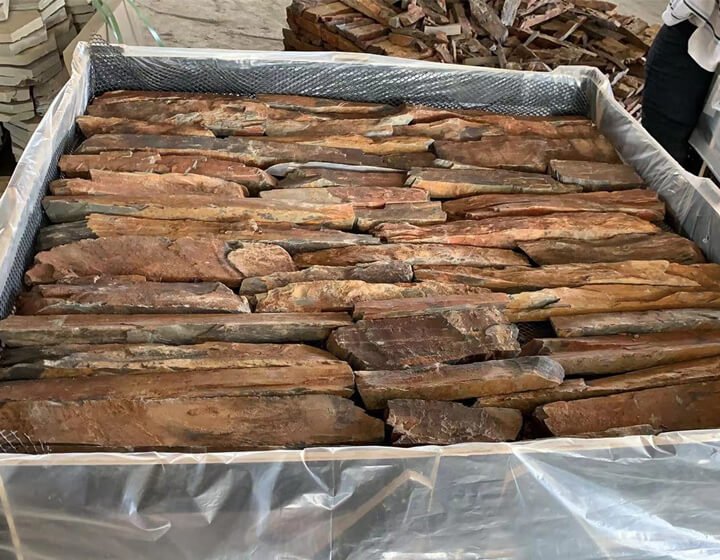
Individual Strips vs. Glued Panels: Why Loose Stone Wins on Quality
High-end masonry in 2026 favors the “zero-repeat” authenticity of individually laid loose stone strips, which bypass the artificial seams and rigid geometry inherent in pre-glued panel systems.
Eliminating Visible Seams for a Continuous Surface
Panelized stone systems often betray their factory origins through repeating patterns and visible “Z-shape” joints. These vertical breaks become obvious under direct sunlight or accent lighting, undermining the architectural value of the project. Individually sawn-back loose stone allows masons to blend units across the entire facade, effectively hiding joints and creating a continuous, monolithic surface that looks structural rather than decorative.
| Feature | Individually Sawn Loose Stone | Pre-Glued Stone Panels |
|---|---|---|
| Visual Pattern | Zero-repeat, bespoke random-lay | Noticeable repeating grid/seams |
| Corner Execution | Authentic masonry corner wrap (L-shape) | Mitered joints or flat butt-ends |
| Geometric Flexibility | Adapts to curves and tight columns | Limited to flat, rectangular surfaces |
- Individual strips allow masons to blend stones across the entire facade, hiding joints that panels expose.
- This method creates a unique wall without visible ‘Z-shape’ or vertical breaks.
- The lack of predetermined boundaries ensures an authentic, hand-crafted look for high-end projects.
Adaptive Installation on Complex Architectural Geometries
Standardized panels fail when they encounter non-linear surfaces, such as curved exterior walls or small-radius columns. Loose stone strips provide the necessary flexibility to wrap these features without requiring awkward cuts or leaving large gaps. By using individual pieces, installers adjust stone placement on-the-fly to accommodate site-specific measurements, ensuring full-depth visual integrity even on custom outdoor kitchen islands or fireplace hearths.
- Installers adjust individual stone placement to accommodate site-specific measurements without awkward cuts.
- Loose strips enable seamless transitions around fireplace hearths and custom outdoor kitchen islands.
- This versatility reduces material waste on projects with complex angles or non-standard dimensions.
Precise Control Over Texture and Color Blending
Utilizing loose strips grants designers and contractors absolute control over the visual weight of the feature wall. Unlike panels, which fix colors in a pre-set arrangement, loose stone allows for the manual distribution of shades. This prevents “hot spots” where too many dark or light stones cluster in one area. Furthermore, masons manually manage the 25–40mm depth variation, ensuring the finished surface has a balanced, three-dimensional texture that catches light naturally.
- Masons hand-pick and place every piece to prevent clusters of identical stone shades.
- Hand-selection ensures a balanced distribution of depth variations across the surface.
- This granular control satisfies luxury market demands for bespoke, one-of-a-kind stone features.
Factory-Direct Authentic Natural Stone Panels

Creating Visual Drama: Managing Depth Variation (0.5″ to 1.5″)
Achieving architectural drama in 2026 relies on high-relief surfaces where variable stone thickness mimics the structural weight of traditional masonry without the engineering burden of full-depth blocks.
Dimensional Realism through Variable Thickness
Architects now specify thin veneer profiles ranging from 0.5″ to 1.5″ to replicate the rugged character of heavy masonry. This specific thickness range provides the necessary relief to create a high-impact surface while maintaining a lightweight profile of approximately 65kg/m². By utilizing individual loose stones rather than flat, uniform panels, designers achieve full-depth visual integrity that remains indistinguishable from structural dry-stack walls.
This approach uses a mix of slate, quartzite, and granite strips to enhance the tactile quality of the installation. The 25mm to 40mm depth control ensures that the stone remains compatible with modern wall substrates and standard moisture barriers. Using a variable thickness strategy allows the project to avoid the “flat” look common in budget-grade alternatives, providing a bespoke aesthetic where every stone sits at a slightly different relief.
| Feature | Standard Glued Panels | Top Source Stone Loose Veneer |
|---|---|---|
| Depth Variation | Uniform 15-20mm (Flat) | Variable 25-40mm (High-Relief) |
| Visual Pattern | Repetitive Seams | Bespoke Random-Lay |
| Corner Finish | Mitered or Butt Joints | Authentic L-Shape Corner Wraps |
Shadow Play and Deep Texture
The intentional 1″ to 1.5″ depth range produces dramatic shadows that shift as light sources move across the facade. This interaction emphasizes the natural split-face texture of the stone, turning a simple fireplace or feature wall into a dynamic focal point. In commercial lobbies and high-end residential spaces, the varying depths capture natural light, creating a sense of movement and organic complexity.
- Leverages high-density quartzite to maintain sharp edge definition and shadow contrast.
- Enhances visual interest through zero-repeat natural variation in stone thickness.
- Works best with targeted uplighting to exaggerate the 1.5″ protrusions.
Precision Installation for Continuous Texture
While pre-assembled panels often show visible horizontal seams, a bespoke random-lay installation ensures a seamless transition across the entire wall. We use 100% sawn-back technology to provide a perfectly flat bonding surface for each individual stone. This precision engineering reduces the on-site labor required to level the stones, even when the face of the stone varies significantly in depth.
To maintain the massive look of full-depth stone at corners and pillars, matching L-shaped corner pieces are essential. These corners wrap the edge with the same 25-40mm thickness profile, concealing the substrate and providing a professional finish. This method eliminates the flat spots and repetitive patterns associated with panelized systems, allowing the mason to curate the texture of the wall piece by piece.
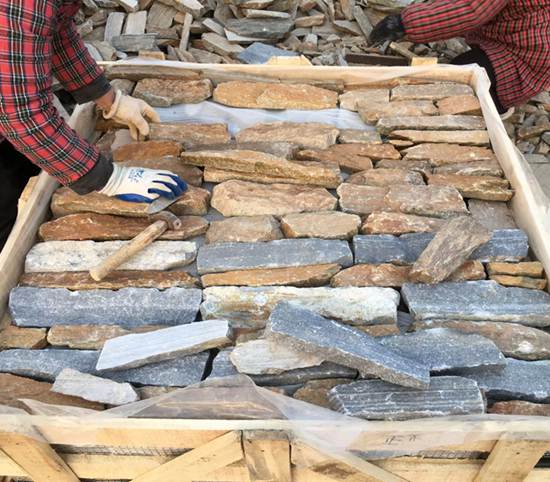
Sourcing the Best Materials: Slate vs. Quartzite vs. Granite Ledgestone
Selecting the right mineral composition for ledgestone dictates more than just the visual finish; it determines the wall’s longevity against chemical weathering, thermal expansion, and maintenance cycles in high-traffic environments.
Quartzite for High-Performance Luxury Applications
Quartzite stands out in 2026 architectural specs for its 7-8 Mohs hardness and resistance to chemical weathering. This material provides superior acid resistance compared to softer sedimentary stones, making it the primary choice for exterior facades in coastal or urban environments. We source quartzite to meet the needs of hospitality projects requiring low-maintenance, high-traffic surfaces that maintain their appearance over decades.
The material mimics the aesthetic of marble while maintaining higher structural integrity. Our Ice White and Blue Quartzite series offer high-density integrity, ensuring the stone resists moisture absorption better than manufactured concrete alternatives. This durability ensures the stone remains color-fast even under intense UV exposure.
| Material Type | Mohs Hardness | Primary Advantage |
|---|---|---|
| Quartzite | 7.0 – 8.0 | Acid resistance and zero-fade UV stability |
| Granite | 6.0 – 7.0 | Thermal stability and freeze-thaw resilience |
| Slate | 5.0 – 6.0 | Deep natural cleft texture and shadow play |
| Marble | 3.0 – 4.0 | High perceived asset value and unique veining |
Slate for Natural Texture and Visual Depth
Slate offers a distinct natural cleft surface that creates dramatic shadows and rustic character at a competitive price point. This material delivers unique color variations ranging from deep charcoal to earthy copper tones, which designers select when a project requires a heavy, textured aesthetic without the premium cost of quartzite.
- Ideal for interior feature walls and residential fireplace surrounds.
- Delivers zero-repeat natural variation in every loose stone installation.
- Easily achieves a bespoke random-lay pattern through traditional masonry techniques.
Granite for Industrial Strength and Commercial Longevity
Granite remains the benchmark for durability in institutional builds due to its density and thermal stability. Large-scale commercial projects utilize granite for its consistent supply chain and predictable aging characteristics. The stone’s low porosity prevents deep staining in urban environments with high pollution levels.
Granite ledgestone resists heat and extreme freeze-thaw cycles, making it ideal for harsh 2026 climates. Because we use individually sawn-back stones, the granite units bond securely to modern wall substrates, ensuring the exterior cladding stays intact regardless of thermal expansion or contraction.
Marble for Elegant Interior Accents and Added Property Value
Integrating real marble ledgestone into high-end designs provides an immediate upgrade in perceived asset value. White marble ledgestone creates a sophisticated, clean look for luxury retail and residential lobbies. Our marble series focuses on interior applications where the stone’s natural veining serves as a focal point.
- Ensures a unique finish for every project by avoiding the repetitive patterns of synthetic alternatives.
- Increases resale value by 5–8% when used as a premium exterior or interior accent.
- Maintains full-depth visual integrity when paired with our matching L-shaped corner wraps.
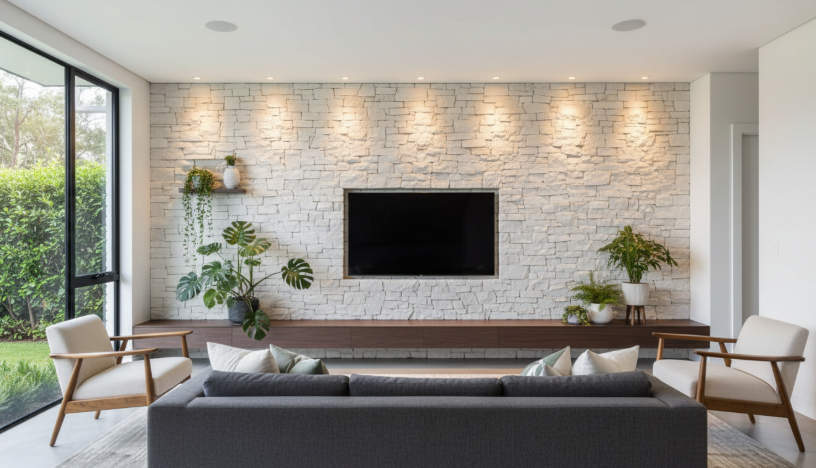
Modern Interior Trends: Using Ledgestone for Feature TV Walls
Natural stone transitions media walls from static, flat surfaces into dimensional focal points that absorb screen glare and improve acoustic performance in modern open-plan living areas.
Interior designers in 2026 prioritize tactile contrast. They pair the smooth, reflective glass of high-definition televisions with the rugged, organic surfaces of natural stone to create a visual anchor in the home. Using materials like quartzite and slate provides a sophisticated backdrop that elevates the perceived value of residential projects while breaking the monotony of painted drywall.
Natural Texture for Contemporary Focal Points
Natural stone series, particularly marble and rough-cut quartzite, offer unique mineral variations that paint or wallpaper cannot replicate. These variations ensure that every feature wall remains a one-of-a-kind installation. The organic depth of these materials interacts with room lighting to produce shifting shadows throughout the day, adding character to minimalist interiors.
- High-density quartzite options offer superior light reflection, brightening spaces even when using darker stone tones.
- Natural mineral veins in slate provide a raw, earthy aesthetic that complements industrial and mid-century modern furniture.
Seamless Backgrounds via Interlocking Z-Panels
Achieving a continuous stone surface behind a television requires eliminating visible joints. Precision-cut interlocking systems allow stones to fit together tightly, creating a monolithic appearance. The Z-shaped design effectively hides vertical seams, which is a critical requirement for high-visibility areas where close-range viewing is common.
Contractors favor these prefabricated systems for their efficiency. In the fast-paced residential renovation market, the ability to install a complex stone feature wall in a fraction of the time required for traditional masonry keeps projects on schedule. These systems provide the look of a hand-laid dry-stack wall while maintaining the structural consistency needed for wall-mounted electronics.
Thermal Stability for Integrated Media Walls
The integration of televisions with gas or electric fireplaces has become a standard in modern living room design. Natural ledgestone serves as an ideal surround for these units because it is non-combustible and thermally stable. Unlike synthetic veneers or wood accents, natural stone does not off-gas or degrade when exposed to the heat cycles generated by fireplaces and high-end entertainment systems.
- Natural stone retains its color and structural integrity over decades of thermal exposure.
- The material acts as a heat sink, helping to moderate the temperature around sensitive electronic components.
- Sawn-back stones ensure a flat bonding surface, preventing the air pockets that can cause stone fatigue in high-heat environments.
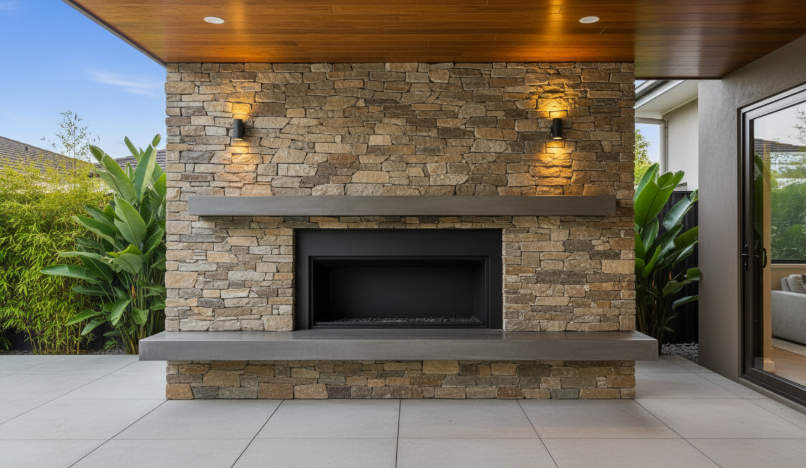
How Sawn Edges Enable a Tighter, Faster Installation
Precision-sawn backing and edges transform loose stone veneer into a high-efficiency architectural system, reducing on-site labor by 30% through the elimination of manual stone dressing and gap-filling.
Precision Infrared Cutting for Seamless Joints
Advanced infrared cutting equipment ensures every individual stone edge is perfectly straight, allowing loose strips to interlock with zero visible gaps. This precision removes the traditional reliance on grout lines, as the stone-to-stone contact creates a continuous, natural surface. By maintaining a consistent 6-inch height for each piece, we prevent the alignment shifting often seen in lower-quality stone shipments.
- Eliminates the need for grout lines by creating tight, stone-to-stone contact.
- Ensures a uniform fit that hides vertical and horizontal seams across 2026 residential projects.
- Maintains a consistent 6-inch height to prevent shifting or alignment issues during vertical stacking.
Minimizing On-Site Labor and Material Waste
Factory-sawn edges remove the burden of manual stone dressing, which significantly lowers the total hours required for installation on commercial facades. Because the stones arrive with a 100% sawn-back finish, they provide a flat bonding surface that adheres instantly to modern substrates. This speed allows masonry teams to complete projects faster than they could with traditional loose brick or fieldstone.
- Reduces the amount of on-site cutting and dust, improving safety for masonry teams.
- Speeds up installation timelines for commercial facades compared to traditional loose brick or stone.
- Decreases material waste as every piece arrives ready for immediate placement without field adjustments.
Dimensional Consistency and Surface Alignment
Strict control over the thickness and height of each stone prevents uneven surfaces and promotes structural balance. We maintain a standardized thickness between 0.75 and 1.25 inches (25–40mm) to avoid lippage on large feature walls. This consistency facilitates smooth transitions between different textures, ensuring that slate, quartzite, or granite installs look intentional and professional rather than haphazard.
- Standardizes thickness between 0.75 and 1.25 inches to avoid lippage on large feature walls.
- Facilitates smooth transitions between pieces, even when mixing different stone textures.
- Supports faster weight distribution analysis for architects designing high-traffic interior lobbies.
Simplifying Corner Transitions with Pre-Cut Units
Matching L-shaped corner pieces use the same sawn-edge technology to wrap around pillars and external corners without complex miter cuts. This system provides an authentic masonry corner wrap that mimics the appearance of full-bed depth blocks. Contractors save significant labor costs on intricate projects like fireplace surrounds and outdoor kitchen islands because they no longer need to grind edges to fit 90-degree angles.
- Eliminates the time-consuming process of grinding edges to fit 90-degree angles.
- Provides a professional, finished look that mimics the appearance of full-bed depth masonry.
- Saves contractors significant labor costs on intricate projects like fireplace surrounds.
Conclusion
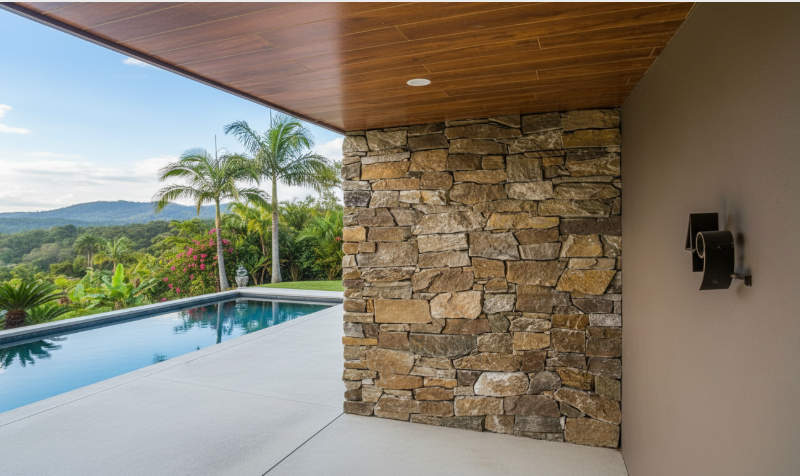
Individual ledgestone strips provide a bespoke, organic texture that mass-produced panels cannot replicate. Precision-sawn backs streamline the installation process by ensuring a flat bonding surface while maintaining the authentic depth variation of natural stone. High-density materials like quartzite and granite protect the long-term visual integrity of the project against weathering and color fading.
You can review our current inventory of loose stone veneers to find the right textures for your upcoming architectural projects. Reach out to our team to request a technical data sheet or a sample crate for your showroom.
Frequently Asked Questions
What is the difference between ledgestone and stacked stone?
Ledgestone is a specific subset of stacked stone characterized by thin, rectangular strips of natural stone or veneer that emphasize a linear, horizontal aesthetic. While “stacked stone” is a broad umbrella term for any masonry style that mimics stones piled on top of one another, ledgestone specifically refers to those with a more uniform, “ledged” height and rugged, split-face texture.
Is ledgestone veneer out of style?
No, ledgestone remains a highly relevant architectural material, particularly for projects seeking organic textures or modern clean-lined finishes. While multi-colored, high-contrast patterns have declined in popularity, modern applications have shifted toward monochromatic palettes—such as tonal whites, soft beiges, and deep charcoals—to fit contemporary and biophilic design trends.
How do you clean dust from ledgestone walls?
The most efficient method for cleaning dust from ledgestone is using a vacuum cleaner equipped with a soft brush attachment. For deeper crevices, a soft-bristled nylon brush or compressed air can effectively dislodge trapped particles. If the stone requires a deeper clean, use a damp microfiber cloth with a pH-neutral stone cleaner, avoiding acidic or abrasive chemicals that could damage the finish.
Can you install ledgestone on drywall?
While thin veneer panels can technically be installed on drywall using high-bond polymer-modified thin-set, it is not the industry-standard recommendation for long-term durability. For a professional installation, it is best to use a cement backer board or a metal lath with a scratch coat to support the weight of the stone and provide a moisture-resistant substrate.
Does ledgestone need grout?
No, ledgestone is specifically designed for “dry-stack” installation, where the pieces are fitted tightly together without visible mortar joints. This emphasizes the natural, rugged texture of the stone. While some designers may occasionally use a “mortar wash” for a specific old-world aesthetic, traditional grouting is neither required nor recommended for standard ledgestone panels.
What is the best lighting for ledgestone?
The best lighting for ledgestone is “wall-grazing” or raking light. By positioning recessed ceiling lights or floor-mounted spots close to the wall surface, the light hits the dimensional face of the stone, creating dramatic shadows that highlight its depth and texture. Warm color temperatures (2700K to 3000K) are ideal for bringing out the organic, earthy tones of natural stone.
