
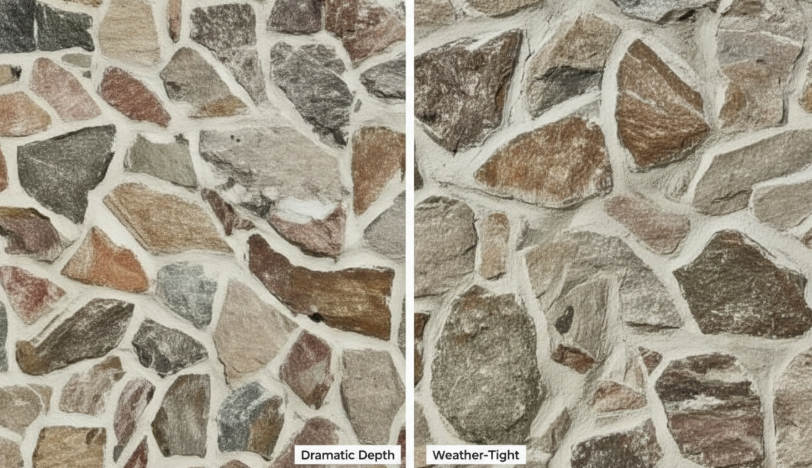
Mastering joint aesthetics serves as a critical quality control measure that prevents costly project reworks and preserves the long-term structural integrity of a masonry facade. Failure to align the mortar profile with the specific stone type can lead to moisture penetration and significant labor overruns when crews must remediate finished walls to meet architectural specifications. For commercial contractors, the choice between a raked joint and an overgrout finish impacts both the project timeline and the total cost of installation.
This guide provides a technical standard for evaluating joint widths and application methods, from standard flush finishes to the specialized dry stack appearance. We break down the procedural differences between various joint styles and examine how mortar color theory influences the final visual result. Following these masonry standards ensures that the crew achieves a consistent finish across large-scale elevations while meeting the durability requirements of the building envelope.
The Visual Impact of Joint Widths
Joint width serves as the primary dial for adjusting the architectural “volume” of a project, where the gap between stones determines whether the final wall speaks with a rugged, traditional voice or a sleek, monolithic tone.
Selection of joint dimensions directly alters how viewers perceive the size and weight of natural stone installations. In the 2026 design landscape, wide joints serve a specific aesthetic purpose by emphasizing the individuality of each stone piece. This technique lends a more rugged and traditional character to exterior facades, making the installation feel grounded and hand-crafted. Because Top Source Stone provides individually sawn-back loose stone rather than pre-glued panels, installers have the freedom to manipulate these ratios to match the architectural scale of the building.
Influence on Perceived Surface Scale
Narrower spacing yields a vastly different result, creating a continuous surface that makes interior spaces appear larger and more streamlined. Designers often favor these tight joints for commercial lobbies or modern residential feature walls to achieve a clean, sophisticated finish. The width-to-stone ratio must be intentional; a large-format Granite Loose Stone wall requires different spacing logic than a smaller-scale Quartzite veneer to maintain visual balance and prevent the mortar from overpowering the natural mineral textures.
- Wide joints highlight the unique contours of individual fieldstone pieces.
- Tight spacing creates a “monolithic” effect favored in contemporary minimalism.
- Specific width selections align the project scale with the surrounding environment.
Depth Perception and Shadow Casting
The width and depth of joints dictate how light interacts with the stone surface. Increased joint width allows for deeper shadow lines, which accentuates the natural clefts and rugged textures of premium natural stone. These shadows provide a three-dimensional quality that artificial materials cannot replicate. By contrast, shallow or tight joints soften the transition between stones, resulting in a more subtle tactile appearance under artificial lighting, which is often preferred for interior accent walls where soft, ambient light is the primary light source.
Shadow dynamics also play a functional role in the final visual inspection. Deep shadow lines help hide minor installation variances by drawing the eye toward the natural 3D contours of the loose stone rather than focusing on the precision of the layout. This creates a “forgiving” aesthetic that celebrates the Zero-Repeat Natural Variation of the 100% natural stone material.
Structural Alignment and Movement Accommodation
Beyond the visual impact, joint width is a technical necessity for maintaining the integrity of the stone veneer. Calculated joint spacing accommodates the thermal expansion and contraction typical in high-performance building envelopes. Without adequate spacing, stones can experience stone-to-stone contact during extreme temperature fluctuations, leading to cracking or spalling over time.
Proper width specifications ensure that the hand-laid system remains perfectly aligned across expansive vertical surfaces. While our thin stone veneer features a precision-sawn back for a flat bonding surface, the individual nature of the stones requires consistent spacing to prevent cumulative alignment errors. This technical approach guarantees that the bespoke random-lay pattern remains structurally sound for the life of the building.
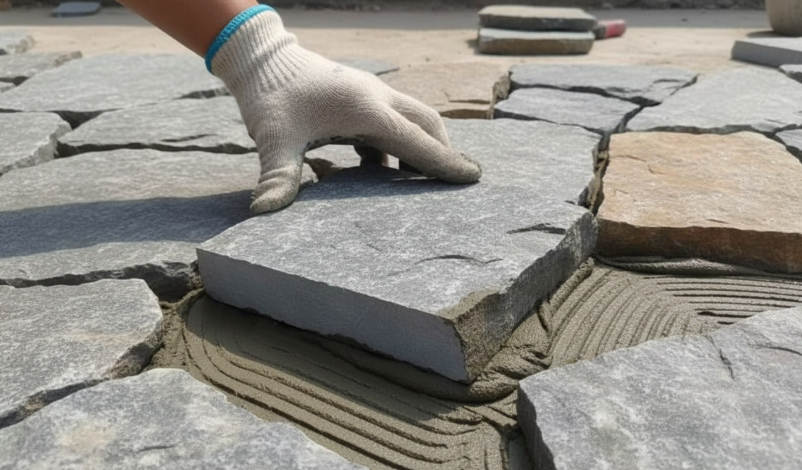
Standard Joints vs. Raked Joints vs. Flush Joints
Selecting the correct joint profile is a performance-driven decision that dictates a facade’s moisture management, shadow depth, and long-term structural resilience.
In modern masonry, the joint profile serves as the primary defense against environmental stressors while defining the final architectural character. While aesthetic trends evolve toward deeper recesses, technical specifications must prioritize regional climate exposure and the specific density of the natural stone. For 2026, industry standards emphasize profiles that balance these thermal expansion coefficients with the desired visual impact.
Concave and V-Shaped Standard Joints
Concave and V-shaped joints represent the 2026 industry benchmark for durability. Masons use specialized striking tools to compress the mortar against the edges of our sawn-back stone, creating a dense, weather-tight seal. This compression is vital for projects in North America and Europe, where freeze-thaw cycles can compromise loose, uncompacted mortar.
- Provides superior water resistance by effectively shedding rain away from the inner wall cavity.
- Creates a compacted surface that resists hairline cracking during structural settlement.
- Offers a classic aesthetic that complements our Granite and Blue Quartzite series.
Raked Joints for Architectural Depth
Raked joints involve removing mortar to a precise depth—typically 6mm to 10mm—to create pronounced shadow lines. This technique emphasizes the “Full-Depth Visual Integrity” of our 25–40mm thin stone veneer, making the finished wall indistinguishable from traditional structural masonry. While visually striking, this profile requires careful execution to prevent moisture collection in exterior applications.
| Joint Profile | Shadow Depth | Recommended Environment |
|---|---|---|
| Standard (Concave) | Minimal / Soft | High-Rainfall / Freeze-Thaw Zones |
| Raked | 6mm – 10mm (Dramatic) | Contemporary Residential / Arid Climates |
| Flush | None (Monolithic) | Lobbies / High-Traffic Commercial |
- Enhances the three-dimensional visual impact by casting dramatic, high-contrast shadows.
- Highlights the unique, rugged edges of our natural quarry stone.
- Demands a high-density mortar to ensure the recessed area does not erode over time.
Flush Joints for Continuous Surfaces
The flush joint technique levels the mortar with the face of the stone, creating a flat plane that minimizes visual interruption. This is the preferred choice for minimalist B2B projects, such as luxury hotel lobbies or corporate feature walls. By eliminating ledges, flush joints simplify maintenance and prevent the accumulation of dust or pollutants.
- Ideal for smooth, monolithic wall appearances in modern interior design.
- Reduces maintenance requirements by preventing environmental debris buildup.
- Works best with our Ice White Quartzite and other clean-faced stone selections.
The Advantage of Individually Sawn-Back Stone Over Panels
While some markets utilize pre-glued interlocking panels, professional masons prefer individually sawn-back loose stone to avoid the repetitive, “stair-step” patterns inherent in factory-made systems. Top Source Stone provides loose pieces that allow for a “Bespoke Random-Lay Pattern,” ensuring every project remains a unique architectural statement.
- Achieves a high-end look without the visible vertical seams found in panelized products.
- Precision-sawn backs reduce on-site labor costs by up to 30% while maintaining maximum bond strength.
- Guarantees “Zero-Repeat Natural Variation” for a truly authentic masonry appearance.
Premium Factory-Direct Stacked Stone Panels
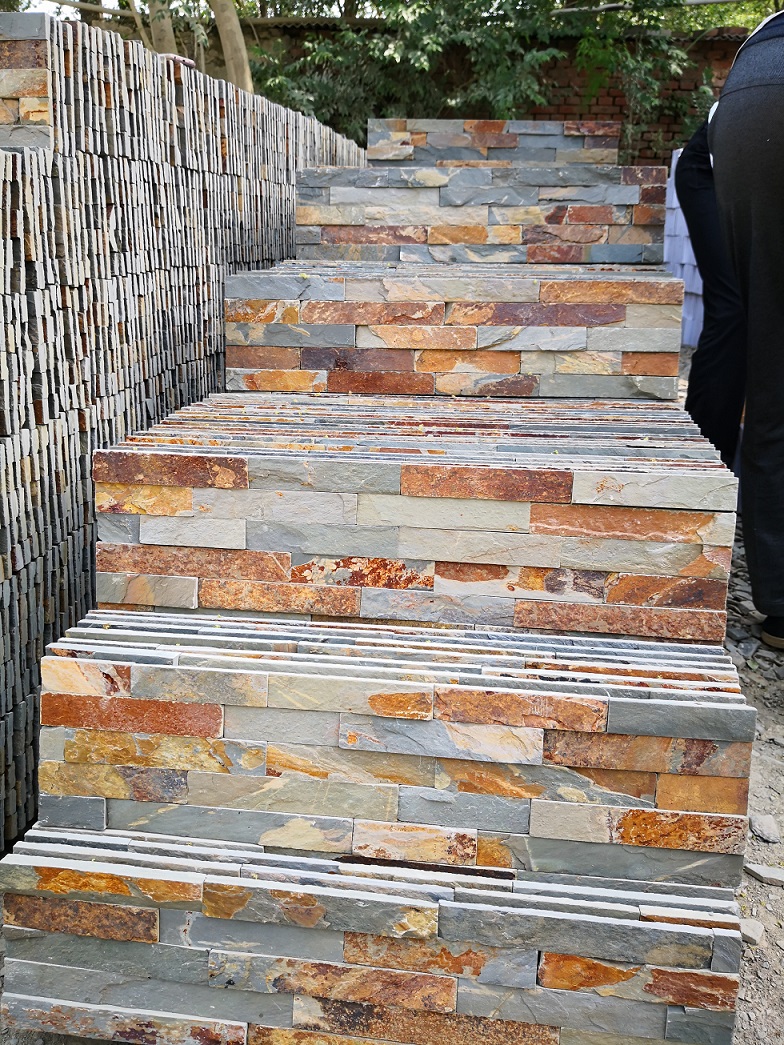
Achieving the Authentic Dry Stack Look
Dry stacking shifts the aesthetic focus from the masonry joints to the mineral textures, requiring 100% sawn-back loose stone to ensure a flush, high-stability bond without the need for traditional grout spacing.
Precision Sawn-Back for Flush Mounting
Standard masonry often struggles with the dry-stack look due to irregular back surfaces that force wider joints for stability. Our Top Source Stone production line solves this through an individually sawn-back process. By precision-cutting the back of every loose stone piece, we provide a 100% flat bonding surface. This technical refinement allows installers to set the stones directly against one another, eliminating the need for thick mortar beds and reducing on-site labor costs by up to 30% compared to traditional fieldstone.
Manufacturing teams use calibrated cutting equipment to maintain a strict thickness control of 25–40mm. This consistency ensures that even though the face remains rugged and natural, the connection to the substrate remains uniform. High-density quartzite and granite variants offer the structural integrity needed to support this tight-joint method without the risk of stone-to-stone compression failure over time.
| Installation Metric | Traditional Mortared Joint | Top Source Dry Stack |
|---|---|---|
| Average Joint Width | 10mm – 25mm | Tight-Fit (0mm – 2mm) |
| Installation Speed | Standard (includes grouting time) | Accelerated (no joint pointing) |
| Backing Type | Rough/Irregular | 100% Precision Sawn-Back |
| Visual Pattern | Grid-like / Individual Silhouettes | Seamless / Continuous Flow |
Textural Selection for Shadow and Depth
The intensity of the dry-stack aesthetic depends heavily on the relief of the stone face. High-relief textures, such as our Blue Diamond Ledgestone or Black Quartzite, create dramatic shadow lines that mimic the appearance of a load-bearing, ancient stone wall. These shadows provide the 3D depth necessary to make a veneer wall indistinguishable from full-depth masonry. Choosing stones with varying depths within the 25–40mm range enhances this effect, making the wall a dynamic focal point that reacts to changing light conditions throughout the day.
- The Rough Series offers deep striations for heavy-masonry shadow patterns.
- Flat Series options provide a contemporary, clean-lined dry stack look.
- High-density minerals ensure lifetime color fastness under UV exposure.
The Bespoke Random-Lay Pattern
Authentic dry stacking avoids the repetitive “stamps” seen in factory-glued panels. By using loose stone, installers execute a bespoke random-lay pattern. This method involves sorting individual pieces to ensure a natural distribution of sizes and colors sourced from the same quarry vein. Masons apply high-strength, polymer-modified thin-set directly to the sawn-back surface, pressing each stone firmly to eliminate voids. This technique maintains structural integrity and creates a zero-repeat natural variation that factory systems cannot replicate.
Corner Engineering for Full-Depth Integrity
The most common point of failure for the dry-stack illusion is the corner. If the thin profile of the stone is visible at the edge, the “heavy stone” aesthetic disappears. We manufacture matching L-shaped corner wraps to solve this. These authentic masonry corner wraps provide the appearance of full-depth structural blocks. By eliminating miter cuts on-site, these pre-fabricated units maintain the shadow patterns and textural continuity around every corner, ensuring full-depth visual integrity for the entire project.
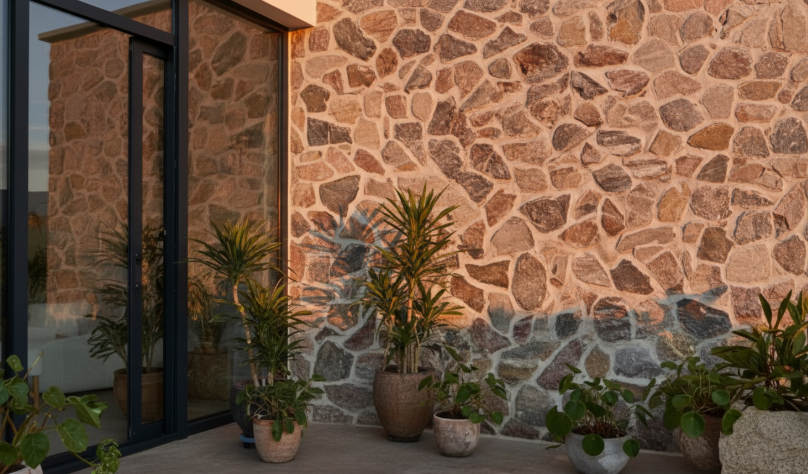
Overgrout Techniques for a Rustic European Feel
Overgrouting transforms thin stone veneer from a modern cladding into a structural-looking facade by intentionally blurring the boundaries between masonry and mineral.
Architects and designers in 2026 favor overgrouting for Mediterranean and farmhouse-style projects where a sense of permanence is required. By utilizing heavy mortar spreads, installers recreate the “weeping joint” look common in centuries-old European villages. This technique emphasizes the shadow and weight of the Rough Series stone, making a new installation appear as though it has weathered the elements for decades. The deliberate overflow of mortar creates an organic texture that anchors the building to its landscape.
Mortar Application for Softening Stone Edge Profiles
The overgrout method involves pushing mortar beyond the standard joint boundaries to partially cover the stone face. This “smeared” texture reduces the visual impact of individual stone edges, blending independent pieces into a singular, monolithic surface. For B2B projects requiring a hand-laid, bespoke aesthetic, this approach ensures the finish looks like a traditional load-bearing wall rather than a thin veneer application.
| Technique | Visual Profile | Installation Focus |
|---|---|---|
| Overgrout | Rustic, Aged, Monolithic | Heavy jointing; masks stone edges |
| Standard Raked | Clean, Architectural, Defined | 1/2″ recessed joints; emphasizes stone shape |
| Dry Stack | Modern, Seamless, Tight | Precision fitting; no visible mortar |
Concealing Joint Irregularities with Heavy Grout Layers
Beyond aesthetics, overgrouting serves as a practical solution for masking minor alignment shifts. Since the mortar intentionally overlaps the stone, contractors save significant labor time by focusing on overall surface texture rather than microscopic precision at every seam. This is particularly effective for loose stone wall cladding where irregular shapes might otherwise leave visible gaps. A thick application of high-strength epoxy-modified mortar ensures that these heavy grout layers bond permanently to the natural stone substrate without cracking.
Compatibility with Natural Stacked Stone Textures
Natural stone units, specifically high-density quartzite and slate, provide the structural integrity required to support heavy overgrout applications. Unlike manufactured concrete products, natural stone resists the moisture retention often associated with thick mortar layers, preventing surface degradation and efflorescence over time.
- Mineral profiles in natural slate interact with mortar to create a multi-dimensional finish.
- Natural variations in stone depth allow the overgrout to “pool” in recessed areas, enhancing the authentic masonry feel.
- Applying a pH-neutral sealant after the grout cures protects the stone and the mortar from 2026 environmental wear.
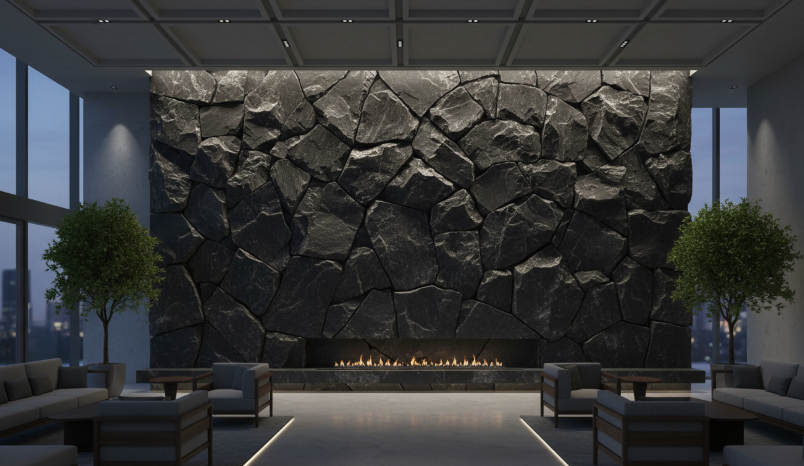
Mortar Color Theory: High Contrast vs. Monochromatic
Mortar color functions as the architectural frame for thin stone veneer; the choice between high-contrast and monochromatic schemes determines whether a wall reads as a collection of individual units or a single, monolithic element.
High Contrast Strategies for Textural Definition
Architects use opposing colors between the stone and mortar to emphasize individual masonry units and create a bold, graphic appearance. This technique defines the unique geometry of each piece, making the installation pattern a primary design feature. By creating a clear visual break between stones, contrast-driven designs maximize the perceived depth of the installation, particularly when using rugged textures like quartzite or slate.
- Light-colored mortar paired with dark slate or quartzite highlights the unique geometry of each stone piece.
- Dark mortar joints against lighter marble or limestone series create a ‘framed’ effect that draws the eye to the masonry pattern.
- Contrast-driven designs maximize the perceived depth of the Rough Series, using shadows and color breaks to enhance the 3D effect.
Monochromatic Blending for Seamless Transitions
Matching the mortar hue to the primary stone color results in a unified, monolithic look that minimizes the visibility of joints. This approach is favored in contemporary commercial facades where a clean, modern aesthetic is required. By blending the joints, the natural variegation and mineral textures within the 100% natural stone take center stage without the interruption of a visible grid pattern.
- Monochromatic schemes create a modern, clean aesthetic ideal for the Flat Series and contemporary commercial facades.
- Color-matching joints allow the natural variegation within the stone itself to take center stage without interruption from a grid pattern.
- Architects in 2026 increasingly specify blended mortar for large-scale interior feature walls to maintain a sense of continuous flow.
The Impact of Color Value and Light Perception
The interaction between stone texture and mortar color changes based on ambient light and the physical depth of the joint. Lighter mortar values reflect more light, making small interior spaces feel larger and more open. In contrast, darker mortar absorbs light, which adds visual weight to the wall, making it appear heavier and more grounded. This is particularly effective for exterior retaining walls or large-scale entryways where structural presence is desired.
- Lighter mortar values reflect more light, making a small space feel larger and more open when used on interior feature walls.
- Darker mortar absorbs light, which can make a wall look heavier and more grounded, suitable for exterior retaining walls or grand entryways.
- Tooling techniques, such as raked or flush joints, alter how the mortar color interacts with the stone’s edge and surface texture.
Precision Customization with Modern Mortar Colorants
Advanced pigment systems allow contractors to achieve exact color matches or specific contrast levels across standard mortar types (N, M, S, or O). In 2026, the use of liquid and dry UV-stable pigments ensures that the mortar maintains its original design intent for decades, resisting fading even in high-exposure environments. Precision dosing charts help installers maintain consistency across different batches, preventing color shifts during large-scale project rollouts.
- Dosing charts help installers maintain color consistency across different batches and masonry types (N, M, S, or O).
- Liquid and dry pigments provide UV-stable options that prevent mortar from fading and maintain the design’s original intent over decades.
- Customized mortar mixes ensure that high-strength epoxy or traditional binders align with the aesthetic requirements of high-end marble and slate series.
Conclusion
Selecting the appropriate joint technique and mortar color defines the final aesthetic and durability of a natural stone feature wall. Precision in these finishing details ensures that individually sawn-back loose stones maintain their structural integrity while delivering a high-end, bespoke appearance. These professional masonry methods bridge the gap between simple wall cladding and authentic, full-depth stone architecture.
Assess your current project requirements to choose a grout style that enhances the natural variation of your selected stone. Reach out to Top Source Stone for a technical specification guide or to request a sample of our quarry-sourced materials.
Frequently Asked Questions
What is dry stack stone veneer?
Dry stack stone veneer is a masonry style where individual stones are installed tightly against one another without visible mortar joints. This technique mimics the appearance of traditional hand-laid stone walls found in historical landscapes, where stones were held in place by gravity and precision fit rather than adhesive binders. It offers a modern, clean aesthetic that emphasizes the texture and natural variation of the stone itself.
How to grout thin stone veneer?
To grout thin stone veneer, use a grout bag to inject mortar into the joints between the stones, ensuring you fill the gaps from back to front to prevent air pockets. Once the mortar becomes “thumbprint hard” (firm but pliable), use a metal striking tool or tuck pointer to press the grout firmly into the joint and smooth the surface. Finally, use a medium-bristle brush to whisk away excess material and create a clean, professional finish.
Best grout color for grey stone?
The best grout color for grey stone depends on your desired contrast level. For a seamless, monolithic look, choose a “Natural Grey” or “Pewter” that matches the stone’s mid-tones. For a bold, modern appearance that highlights the shape of each stone, use a “Bright White” or “Cool Silver.” Alternatively, charcoal or dark grey grout can provide a sophisticated, moody aesthetic that adds depth to the installation.
How to make stone veneer look like dry stack?
To achieve a dry stack look with stone veneer, install the stones as closely together as possible, minimizing gaps. If you must use mortar for structural reasons, use a “tight-joint” technique where the mortar is kept deep in the joints and away from the stone’s face. Additionally, selecting a stone profile specifically manufactured for dry stacking—which features flat edges and consistent heights—will provide the most authentic, mortar-free appearance.
What is overgrouting?
Overgrouting, often referred to as a “German Smear” or “Sack Rub,” is a decorative masonry technique where extra mortar is applied so that it partially covers the face and edges of the stones. This technique softens the sharp lines of the stone veneer, creating an aged, rustic, or European “Old World” look. It is highly effective for adding texture and a sense of history to modern construction.
Can I change the color of my grout?
Yes, you can change the color of your grout using a high-quality grout colorant or epoxy-based stain. These products are applied directly over existing, cured grout joints and penetrate the surface to provide a permanent, uniform color change. For stone veneer applications with deep joints, you may also choose to “re-point” by raking out the top layer of old mortar and applying a fresh layer of new, colored mortar.
