
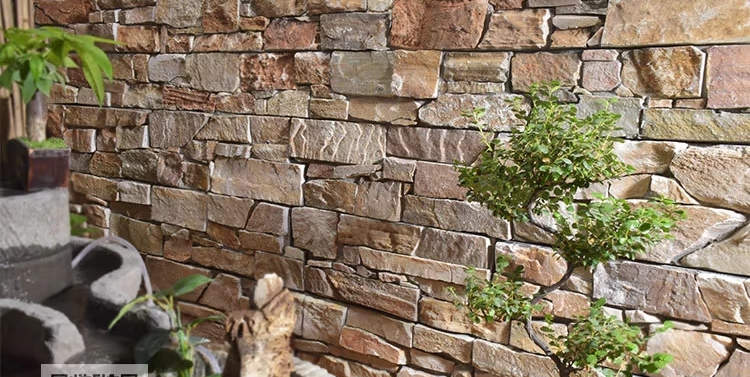
If you’re a General Contractor (GC) sitting on a set of architectural plans that calls for natural stacked stone over concrete or brick, the first question isn’t which stone palette to choose — it’s whether the wall substrates can safely carry the load. Natural stacked stone panels run 4–6 lbs per square foot, a substantial weight profile that is double what lightweight synthetic replicas weigh. While structural concrete at 3000 psi or brick at 2500 psi handles this mass smoothly, the vast majority of field failure modes stem from improper surface preparation and adhesive mismatches rather than the stone itself.
Where generic manufacturer guides fall short is skipping the exact chemical adhesive specifications required to mitigate vertical shear stress. For this heavy masonry load, pre-mixed organic mastics will cause panel slippage — a premium cementitious thin-set mortar with ANSI A118.4 compliance and a minimum 95% bond strength is a mandatory jobsite requirement. This comprehensive technical guide walks through substrate-specific preparation protocols, cost adders, and IBC fire-rated assembly baselines so you can spec it correctly once and permanently eliminate the callbacks that eat your contract margins.
Concrete vs Brick: Load & Prep Differences
Solid masonry substrates deliver the ultimate structural base for heavy ledgestone panels, provided the bond interface is cleared of chemical release agents and salt efflorescence crystals.
Concrete: Direct Bond with the Right Spec
Poured concrete walls at or above 3000 psi compressive strength support stacked stone panels directly without needing mechanical lath or scratch coats. However, the critical variable remains the chemical bond layer. You must specify a dry-set latex-portland cement thin-set mortar meeting ANSI A118.4. Pre-mixed mastic completely lacks the shear resistance to hold a 4–6 lb/ft² panel vertically, guaranteeing sag within the first 24 hours. The concrete must be fully clean, cured for a minimum of 28 days, and free of residual form-release oils. Applying a diluted bonding agent or a tight tack coat of thin-set before panel back-buttering is required to validate factory material warranties.
Brick: Cleaning and Reinforcement Are the Deciding Factors
Clay brick substrates at 2500 psi minimum compressive strength easily handle the panel mass, but the failure point rapidly shifts to the surface bond interface. Brick surfaces lose up to 40% of their adhesive bond strength if latent efflorescence salts and weathered mortar residue are left untreated. A phosphoric acid etch followed by a high-pressure water rinse is the only reliable field method to restore surface reactivity; wire brushing alone is insufficient. If the existing mortar joints exhibit any loose degradation, installing a galvanized metal lath at 1.5 lb/ft² paired with a 1/2-inch mortar scratch coat is mandatory to transition the assembly into a mechanically anchored system.
Drywall & Cement Board: Must-Have Lath Matrix
Drywall alone fails catastrophically under the 4–6 lbs/ft² load of natural stone panels. Metal lath networks and cementitious scratch coats are mandatory structural requirements to bridge stud cavities.
Standard drywall—even 5/8″ Type X boards—cannot support heavy natural stacked stone panels directly. The panel load exceeds drywall’s fastening pull-out thresholds by roughly 2x. To secure this plane, installers must mechanically anchor a code-compliant 1.5 lb/ft² expanded metal lath fastened with 1-1/4″ wafer-head screws at 6-inch vertical centers directly into the underlying framing. This layout transfers the shear stress to the studs. The lath then receives a 1/2-inch scratch coat of Type S mortar, forced through the mesh to key the lath. Skipping this step means bonding to the drywall paper facing—a known failure mode in 80% of interior veneer insurance claims.
Conversely, utilizing cement board eliminates the need for a scratch coat, but only if joint reinforcement is strictly managed. You must apply alkali-resistant mesh tape; standard fiberglass mesh tape degrades rapidly in high-alkali cementitious environments, losing its structural bond within 12 months. Embed the tape into an ANSI A118.4 thin-set mixed to a stiff consistency to prevent sagging. The adhesive must match the thermal expansion rate of the underlying cement board to mitigate shear stress at the bond line during extreme seasonal temperature cycling.
Fire-Rated Substrate Assemblies (IBC 1403.5)
International Building Code (IBC 1403.5) mandates completely non-combustible backer materials inside egress paths, commercial lobbies, and public exit stairwells.
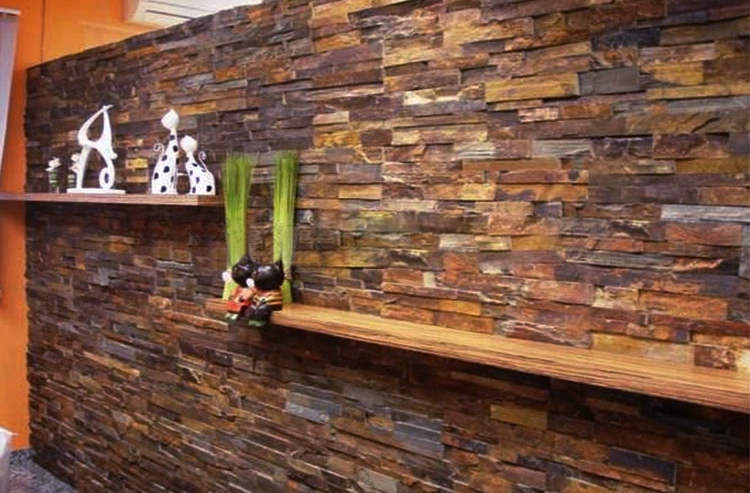
When stacking natural stone panels in a commercial exit corridor, code enforcement is absolute. Untreated plywood, standard gypsum, or non-rated backers fail inspections immediately because a fire that compromises the wall assembly can block occupant egress. Solid poured concrete and clay brick masonry meet the IBC non-combustible baseline outright without extra layering. To achieve a certified 1-hour fire-resistance assembly over framed walls, GCs must deploy a minimum 5/8-inch Type X drywall base, overlaid with a mechanically fastened metal lath assembly and a 1/2-inch cementitious scratch coat.
To back this up, premium stone veneer shipments must carry verified **ASTM E136 batch-certification data**. This testing standard exposes the material to 750°C inside a furnace to measure heat release and mass loss. Natural stone panels from Top Source Stone, such as our Blue Diamond Loose Ledgestone Veneer, carry independent ASTM E136 compliance documentation because the quarried stone contains zero organic binders or synthetic resins. Ensuring every layer of your assembly—substrate, mortar, and stone—is non-combustible is the only way to safeguard your commercial occupancy permits.
Adhesive Selection Matrix by Substrate Type
Selecting the wrong mortar formulation for a specific substrate is the single fastest route to delamination. Standard polyurethane or rubber-based construction adhesives (like PL Premium or Liquid Nails) are engineered for shear loads on low-weight synthetic replicas (2–3 lbs/ft²). Applying them to natural stone panels at 4–6 lbs/ft² will lead to progressive embrittlement and bond failure during subsequent freeze-thaw cycles, completely voiding your project warranties.
| Substrate Base Type | Approved Adhesive Specification | Mandatory Surface Preparation | Key Engineering Notes |
|---|---|---|---|
| Concrete (≥3000 psi) | ANSI A118.4 Cementitious Thin-set | Clean form oils; apply tack bonding coat | Requires 95% minimum full mortar transfer. No mastic. |
| Brick (≥2500 psi) | ANSI A118.4 Polymer-Modified Thin-set | Phosphoric acid etch; pressure wash rinse | Uncleaned efflorescence cuts bond by 40%. |
| Drywall Framing | ANSI A118.4 Mortar over Scratch Coat | Fasten 1.5 lb/ft² lath; apply 1/2″ Type S bed | Drywall alone fails under load. Use Type X for fire walls. |
| Cement Board (≥1/2″) | ANSI A118.4 Latex-Portland Thin-set | Alkali-resistant tape on reinforced joints | 1/2″ square-notched trowel required for solid backing. |
Transitioning Between Substrates (Multi-Wall Projects)
Multi-wall projects fail visually and structurally when seams align directly at substrate shifts, skipping critical expansion joint tape barriers.
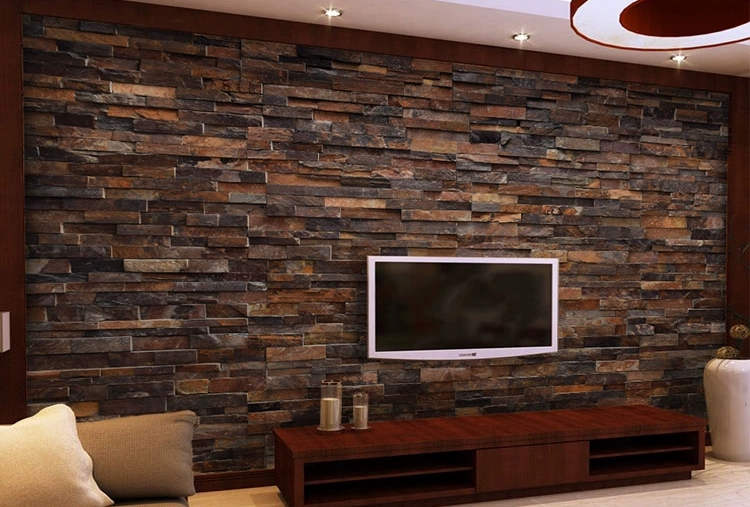
Poured concrete at 3,000 psi and clay brick at 2,500 psi expand and contract at completely different rates under thermal cycling. When stacking heavy stone panels continuously across both materials, this interface becomes an intense stress line. Installers must incorporate a 1/2-inch-wide control joint at every substrate plane transition change (such as concrete-to-brick or masonry-to-wood-framing). Embed expansion control joint tape directly into the mortar bed and do not bridge the gap with stone panels; let the ledgestone terminate cleanly on each side and seal the seam with a flexible silicone-based sealant capable of handling a 25% movement threshold.
To prevent visible cracking across seasonal transitions, field crews must enforce a **minimum 24-inch panel seam stagger** across the junction line. Start the first panel row on the concrete side with a full-width unit, and start the brick side with a half-width cut. This offsets the vertical joint grid by two feet. Color variation can compound this transition line issue; standard wholesale lots can exhibit a 10–15% batch hue drift under commercial lighting. Top Source Stone eliminates this risk by mandating strict same-batch sourcing across your full order, ensuring that panels mounted on the concrete framing seamlessly match the brick-mounted units within visual tolerances.
Case Study: Layout Patterns from a Commercial Build
On a recent commercial retail storefront project in Chicago, the design specification called for a continuous installation of Blue Diamond Loose Ledgestone Veneer across an existing poured concrete foundation wall directly abutting an older brick party wall. The general contractor executed a full-scale mock-up layout on the concrete face before initializing mortar applications on the brick side. This mock-up revealed a cumulative 3/8-inch alignment offset at the transition plane because the brick surface was 15% more uneven than the new concrete.
To resolve this, the installer shimmed the mortar bed on the brick side using structural thin-set to flush the stone panel plane, then installed continuous control joint tape exactly at the seam junction line. Panels were systematically staggered 26 inches across the masonry split line. Backed by direct factory technical support and premium same-batch sorting, the building envelope has sustained seasonal freeze-thaw cycles for 14 months without a single hairline fracture or warranty callback.
Conclusion
Choosing the right substrate—concrete, brick, or prepared drywall—directly determines whether stacked stone panels stay put for decades or fail within a single warranty cycle. The engineering physics are clear: concrete needs 3000 psi minimum, brick needs 2500 psi, and drywall alone cannot support a 4–6 lbs/ft² load without a proper metal lath and scratch coat matrix. Adhesive selection is equally non-negotiable—pre-mixed mastics trigger vertical slippage, whereas cementitious thin-sets meeting ANSI A118.4 deliver permanent structural anchoring and track natural thermal movement. Review your substrate specifications against fire-rating baselines before pouring your mortar, and source batch-certified, non-combustible ASTM E136 materials to safeguard your commercial projects.
Frequently Asked Questions
Which masonry material exhibits a longer operational lifespan, brick or natural stone?
Both raw materials possess decades of structural durability, but natural stacked stone panels rely entirely on proper substrate engineering to survive. Up to 80% of installation failures stem from skipping scratch coats or using non-compliant mastics. Brick backer planes must be etched to remove efflorescence salts before panel application; if prepped under ANSI rules, the stone assembly will outlast the building warranty framework.
Is choosing brick as a base cheaper than a direct natural stacked stone panel installation?
While raw clay brick is cheaper as a face material, installing heavy natural stacked stone panels incurs specific substrate preparation adders ranging from $0.50 to $1.50 per square foot. If the baseline wall is unstable and requires structural reinforcement or wire lathing, labor expenses can double. GCs should always quote the entire wall assembly, including mechanical anchoring, rather than comparing standalone material costs.
What is the correct protocol to safely fill gaps and joints inside a stacked stone system?
Gaps must be sealed using a polymer-modified cementitious pointing mortar or grout that matches the batch stone coloration. Never deploy pre-mixed bucket mastic, as it shrinks and cracks under heavy vertical loads. For standard joints up to 1/2-inch, utilize a commercial grout bag; clean off excess residue following a 24-hour curing block and test color matches on scrap panels first.
How can procurement managers guarantee zero batch color variation across large jobsites?
Mitigating hue drift requires securing direct single-batch sourcing from the quarry factory grid. Natural options like Blue Diamond Loose Ledgestone are processed under strict shade sorting protocols at our mill. GCs should also stage panels by substrate zone during dry mock-ups, preventing mixed cut remnants from highlighting structural transition splits under sharp commercial light.